

Why the Sphinx Still Amazes the World
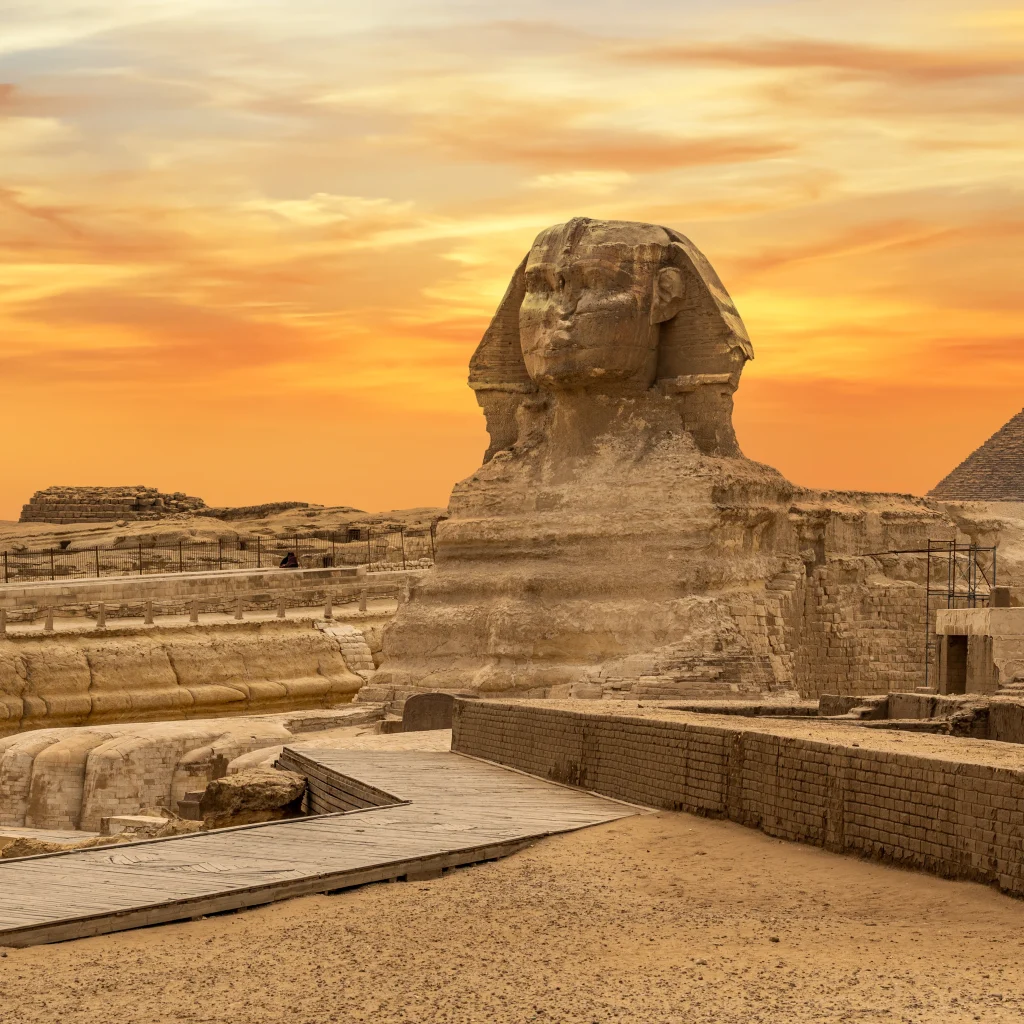
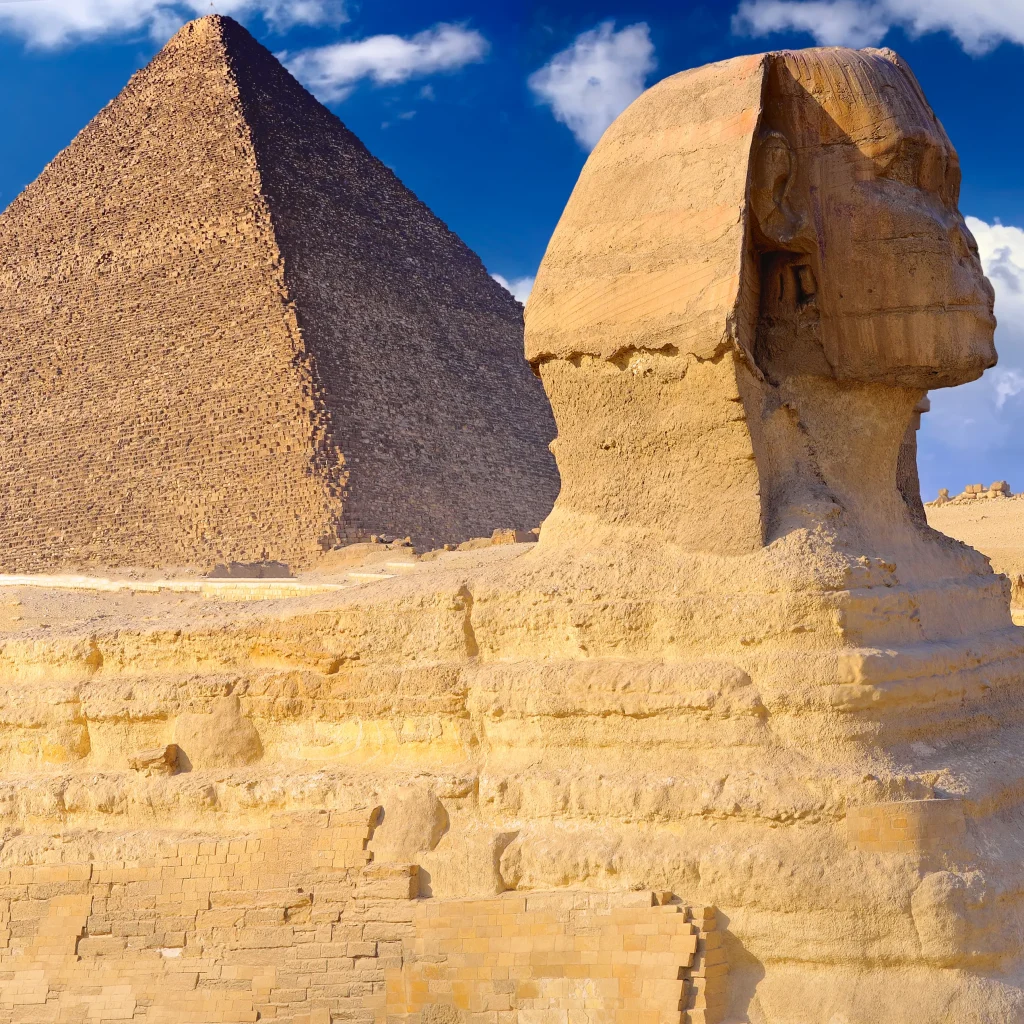
The great sphinx of Giza is one of the most iconic and mysterious monuments of ancient Egypt. Located on the Giza Plateau, this colossal statue stands as a silent guardian beside the pyramids, watching over the desert for thousands of years. With the body of a lion and the head of a human, the monument symbolizes strength, wisdom, and royal authority.
Carved directly from natural limestone bedrock, the Sphinx has inspired generations of historians, archaeologists, and travelers. This guide explores the story behind the Sphinx, the legends and debates surrounding its age and erosion, what visitors can expect to see today, and how to plan a meaningful visit to one of Egypt’s most fascinating ancient landmarks.
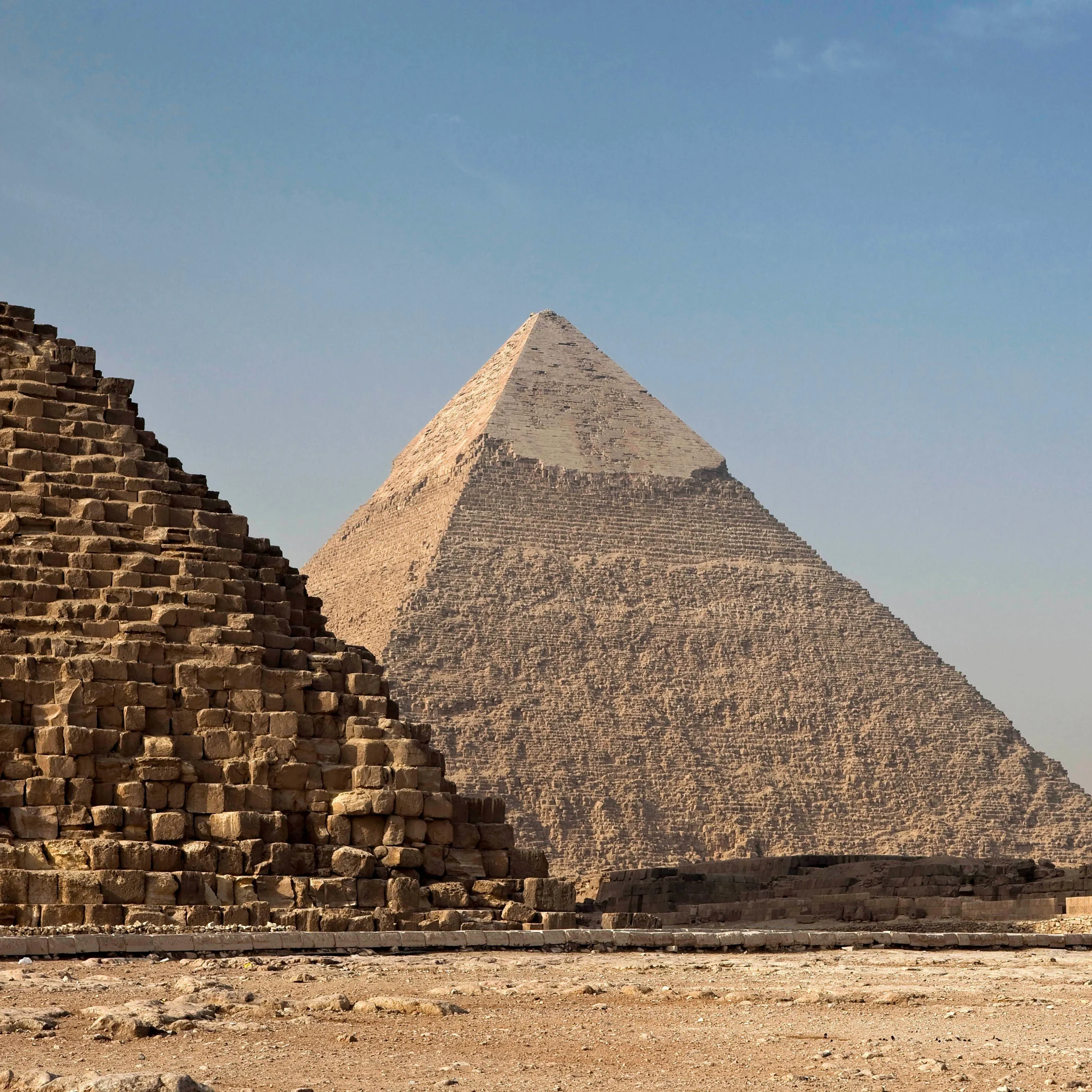
Quick Facts
- Location: Giza Plateau, Egypt
- Length: ~73 meters (240 ft)
- Height: ~20 meters (66 ft)
- Estimated date: c. 2570 BCE
- Attributed to: Pharaoh Khafre (Fourth Dynasty)
- Time needed: 30–45 minutes
- Tickets/Entry: Included in Giza Plateau ticket
- Top highlights: Lion body, human head, pyramid backdrop
What Makes the Sphinx Exceptional
- One of the world’s oldest monumental sculptures
- Carved from a single limestone outcrop
- Combines human intelligence with lion strength
- Closely linked to Khafre’s pyramid complex
- Most enigmatic monument on the Giza Plateau
History and Origins
Most scholars agree that the great sphinx of giza was built during Egypt’s Old Kingdom, around 2570 BCE, and is associated with Pharaoh Khafre. Its position and alignment suggest it was part of his pyramid complex, serving both religious and symbolic purposes.
As part of sphinx history, the monument likely represented a guardian figure protecting sacred royal spaces. Over time, sand buried much of the statue, preserving it for centuries until major excavation and restoration efforts began in the modern era.
Theories, Legends, and the Erosion Debate
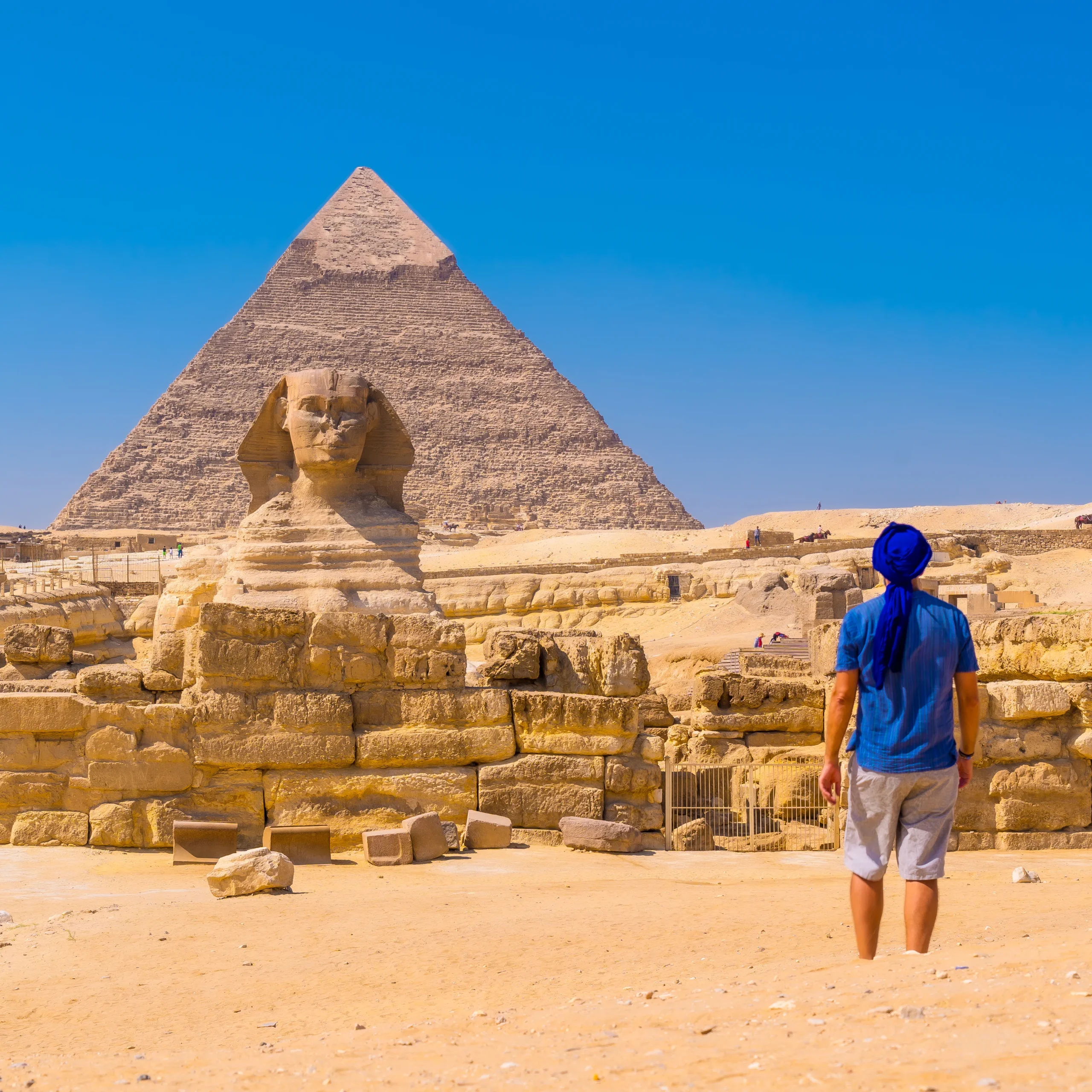
One of the most debated sphinx facts concerns erosion patterns on the statue. Traditional scholars attribute the damage to wind and sand, while alternative theories argue that water erosion suggests a much older origin.
Legends also speak of hidden chambers beneath the statue, possibly containing ancient knowledge or treasures. While no definitive evidence confirms these stories, they continue to fuel fascination and research around the monument.
The Missing Nose Mystery
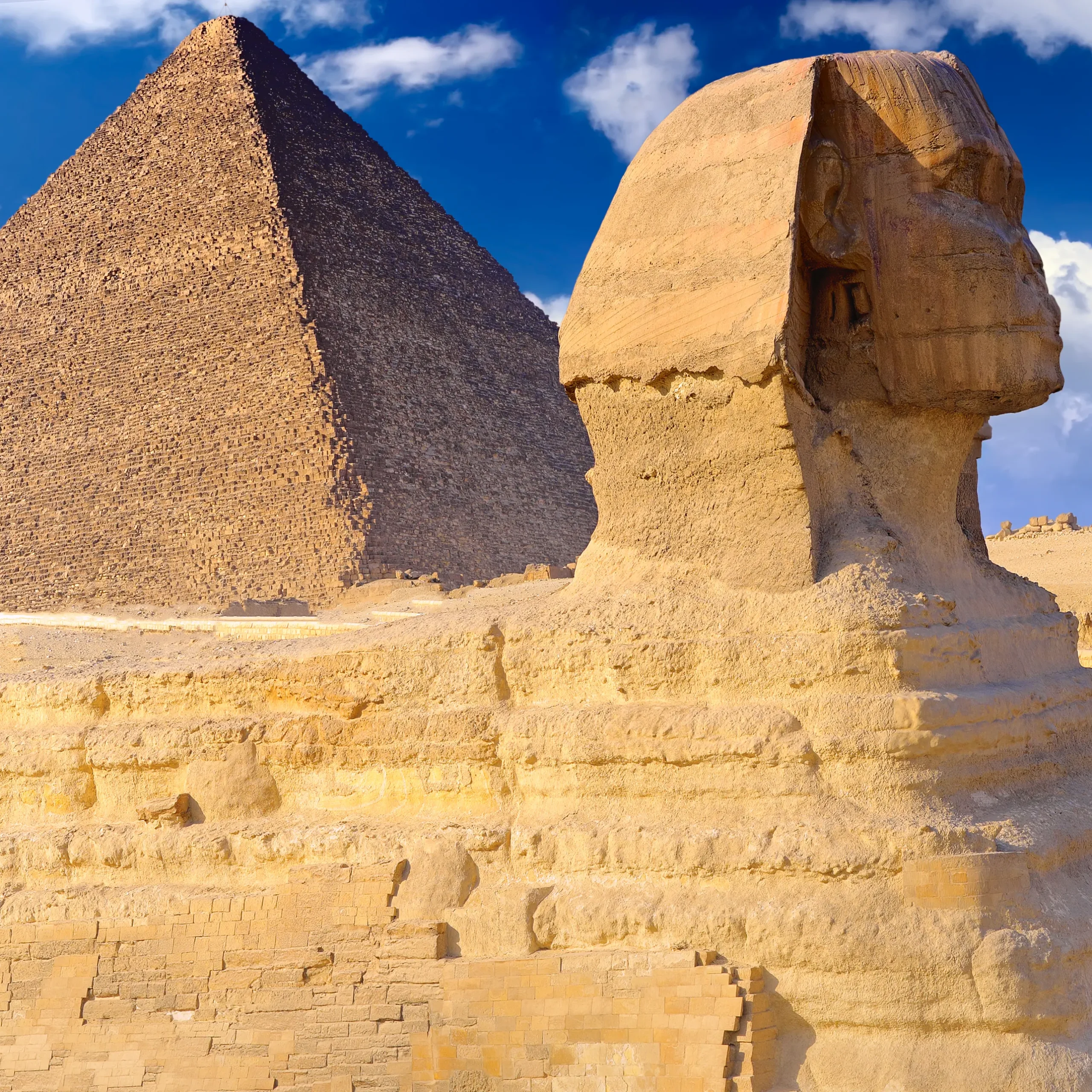
The missing nose of the Sphinx is one of its most recognizable features. Despite popular myths, there is no evidence linking its destruction to Napoleon’s troops. Historical drawings from before his arrival already show the nose missing.
Most historians believe the damage was intentional and likely occurred during the medieval period, possibly due to religious iconoclasm.
How to Visit the Sphinx
- Getting There
The monument is easily accessible as part of a visit to the Giza Plateau, reachable by taxi, Uber, or guided tour from Cairo. - Tickets
Entry is included with the standard Giza Plateau ticket. - Time Needed
Plan 30–45 minutes to view, photograph, and learn about the statue. - Best Time to Visit
Early morning or late afternoon provides softer light and fewer crowds ideal for photography.
If you’re researching how to visit sphinx, combining it with the pyramids in one visit is highly recommended.
Many travelers choose a Giza day tour from Cairo for transport, tickets support, and a licensed guide.
Tips to Know Before You Go
- Visit early or near sunset for best light
- Wear comfortable walking shoes
- Bring water and sun protection
- Photography is allowed
- Expect crowds near peak hours
- Combine with nearby pyramids
- Guides add valuable historical insight
- Stay within designated paths
What to See Near the Sphinx
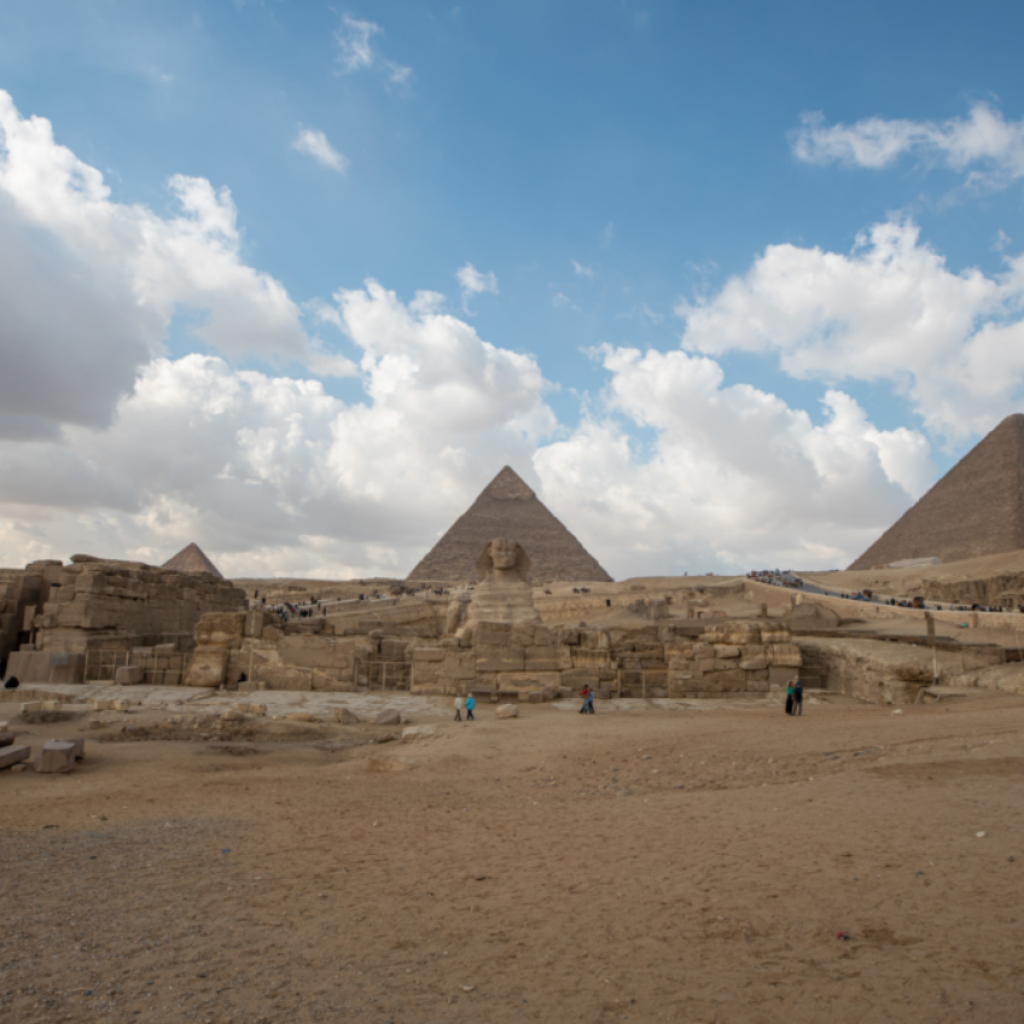
The Sphinx sits at the heart of the giza plateau sphinx area, surrounded by the Great Pyramid of Khufu, the Pyramid of Khafre, and the Pyramid of Menkaure. Visiting these monuments together provides a complete understanding of royal funerary traditions during Egypt’s Fourth Dynasty. To go deeper into pyramid history, add the Saqqara Step Pyramid (Djoser) to your Cairo itinerary.
For a seamless itinerary, explore our Egypt tour packages that include Cairo and Giza highlights.
FAQs
Q: Who built the Sphinx?
A: Most scholars attribute it to Pharaoh Khafre during the Fourth Dynasty.
Q: How old is the Sphinx?
A: It is generally dated to around 2570 BCE, though alternative theories exist.
Q: Can visitors get close to the Sphinx?
A: Visitors can view it from designated paths but cannot touch the monument.
Q: Why is the Sphinx’s nose missing?
A: Historical evidence suggests deliberate damage in medieval times.
Q: Is the Sphinx included in Giza tours?
A: Yes. Nearly all Giza Plateau visits include the Sphinx.


0 Comment