
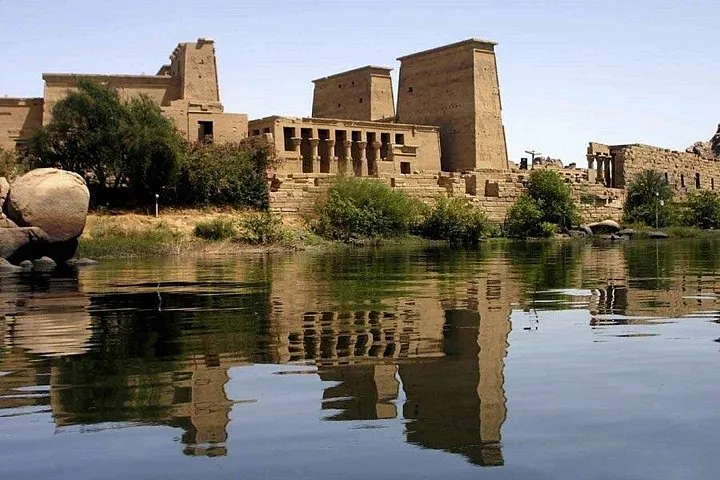

Agilkia Island is one of Egypt’s most remarkable examples of archaeological rescue. Today, visitors approaching by boat see elegant temples rising above the water near Aswan, framed by granite outcrops and the calm surface of the Nile. What is easy to miss is that this sacred complex did not originally stand here. The monuments were moved from nearby Philae Island after rising water threatened to submerge them permanently.
This agilkia island philae egypt guide explains why the temples had to be relocated, how the rescue was carried out, what visitors see today, and how to plan the journey. It also explores the religious importance of Isis, the engineering behind the move, the relationship between the old and new islands, and why the site remains essential to understanding both ancient Egypt and modern heritage conservation.
For travelers interested in architecture, mythology, archaeology, and Nile history, Agilkia is far more than a scenic stop. It is a place where an ancient sanctuary and a twentieth-century rescue story exist side by side.
Where Is Agilkia Island?
Agilkia Island lies in the Nile near Aswan, south of the city and close to the First Cataract region. It is the present home of the Philae temple complex, which was transferred from the original Philae Island during an international conservation campaign.
The island is reached by boat from the marina near the archaeological site. There is no road directly to the temples, so the short water crossing forms part of the experience.
Although many travelers still refer to the entire destination simply as Philae, the temples visitors walk through today stand on Agilkia Island. Understanding this distinction helps explain why the surrounding landscape looks carefully arranged rather than entirely natural.
The island was reshaped to resemble the topography of old Philae as closely as practical, allowing the reconstructed temples to retain a strong relationship with water, elevation, and approach.
Why Philae Was So Important
Philae was one of the most important religious centers in southern Egypt, especially during the Ptolemaic and Roman periods. The sanctuary was primarily associated with Isis, one of the most widely revered goddesses of the ancient Egyptian world.
Isis was connected with motherhood, healing, magic, protection, kingship, and the myth of Osiris. Her cult eventually became influential far beyond Egypt, spreading through parts of the Mediterranean during the Greco-Roman period.
Pilgrims came to Philae to worship, participate in rituals, and honor the divine family of Isis, Osiris, and Horus. The temple complex developed over centuries, with different rulers adding gateways, courts, chapels, colonnades, and decorative programs.
The location itself also mattered. Islands in the Nile could carry powerful symbolic associations, and Philae’s setting near Egypt’s southern frontier gave it both religious and political significance.
Any philae temple guide therefore needs to treat the complex not as one building, but as a layered sacred landscape shaped by generations of rulers and worshippers.
Why the Temples Had to Be Moved
The first major threat came with the construction of the Aswan Low Dam at the beginning of the twentieth century. As the dam was raised in later phases, water increasingly surrounded and seasonally submerged parts of Philae.
Photographs from the period show columns, courtyards, and walls standing partly in water. Although the sight could appear romantic to visitors, repeated flooding threatened stone surfaces, decoration, structural stability, and the long-term survival of the monuments.
The construction of the Aswan High Dam created an even greater challenge. The new water-control system permanently changed levels across the region, making the old island unsuitable as the long-term home of the sanctuary.
Saving Philae required more than building a wall around it. Specialists eventually chose to dismantle the monuments and reconstruct them on nearby Agilkia Island.
The philae island relocation became one of the most ambitious projects within the wider international effort to save Nubian monuments threatened by dam construction.
The International Rescue Campaign
The relocation of Philae formed part of the UNESCO-led campaign to save the monuments of Nubia. Egypt and Sudan appealed for international assistance as archaeological sites faced flooding from the Aswan High Dam and the creation of Lake Nasser.
The campaign brought together archaeologists, engineers, architects, conservators, surveyors, governments, and technical teams from many countries.
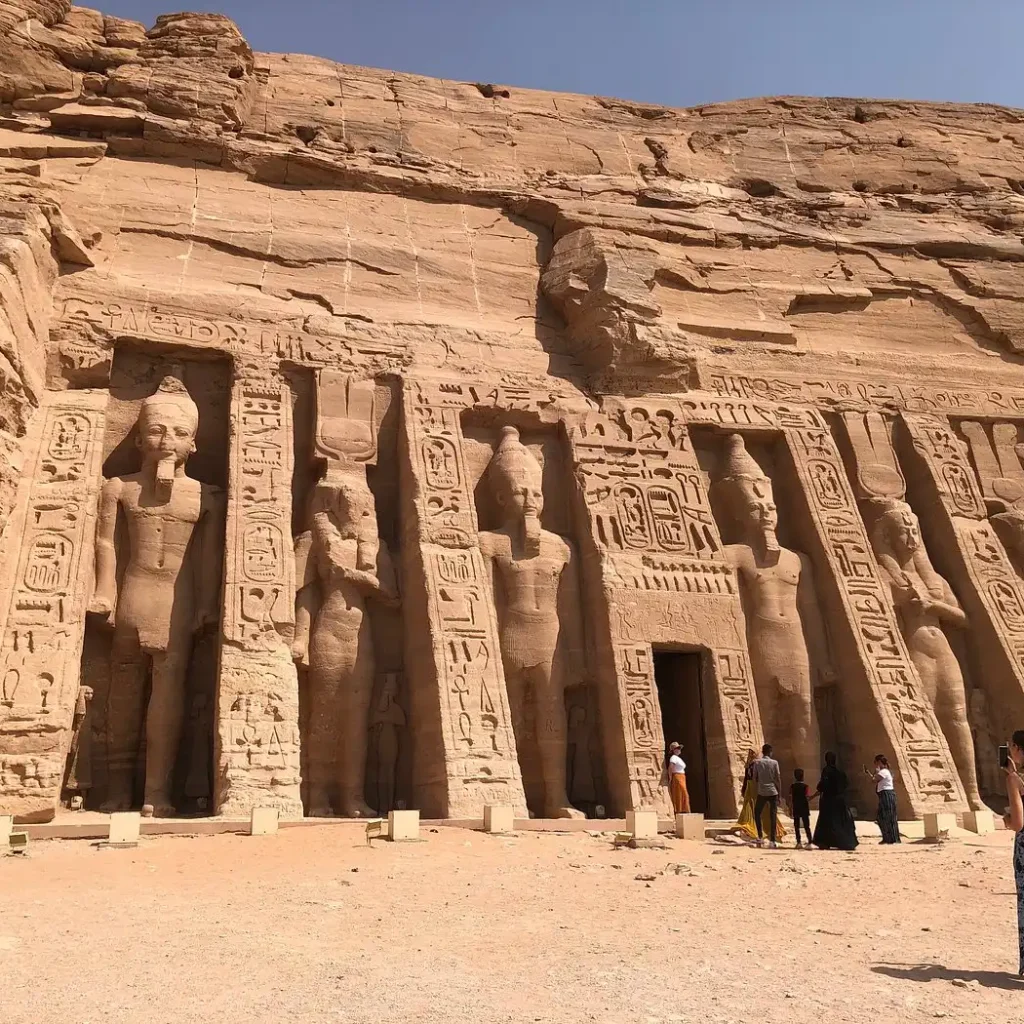
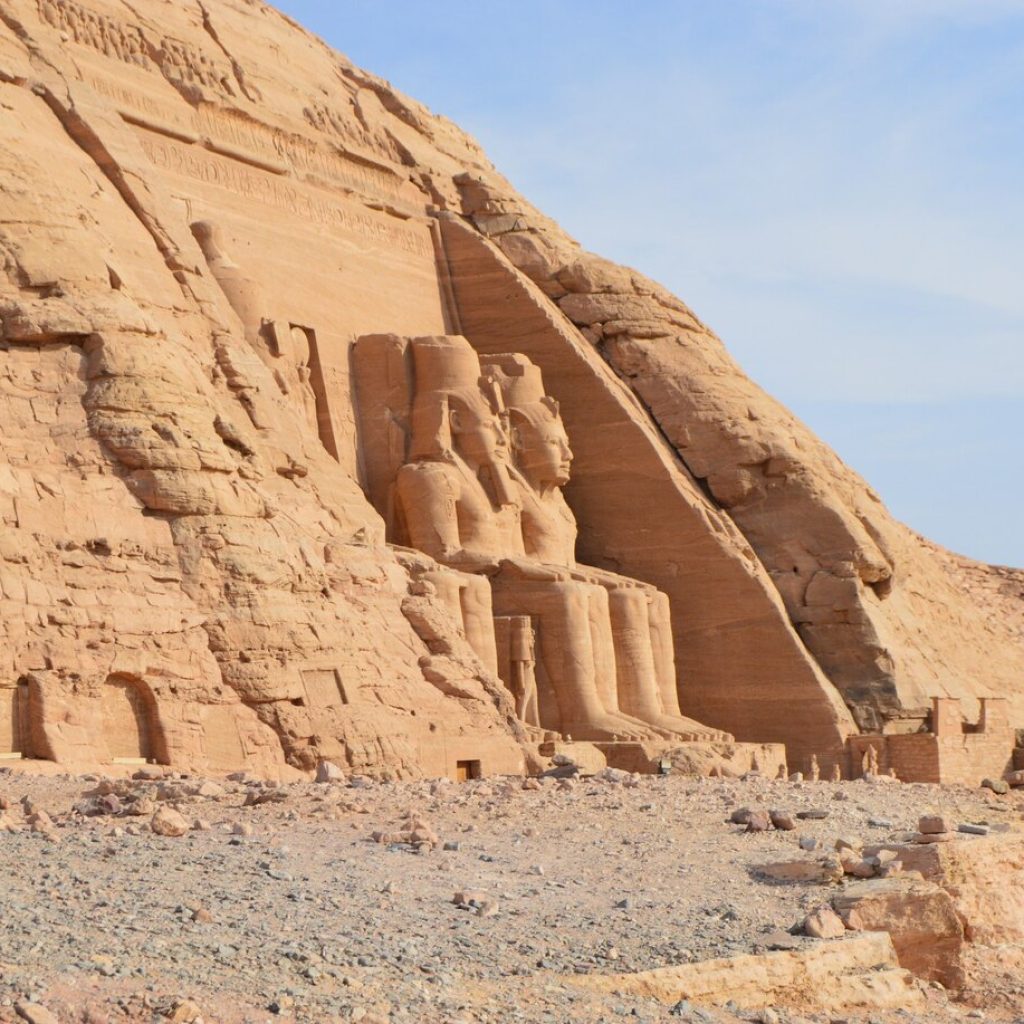
Abu Simbel became the most famous rescue, but Philae presented a different challenge. Instead of moving colossal rock-cut temples, teams had to dismantle a dense collection of freestanding structures, preserve thousands of decorated blocks, and recreate the relationship between buildings on a new island.
The work required careful documentation before any stone was removed. Measurements, photographs, drawings, numbering systems, and plans ensured that each piece could be returned to the correct position.
The success of the project demonstrated that large-scale development and heritage preservation did not always have to be treated as mutually exclusive goals.
Preparing Agilkia Island
Before the temples could be moved, Agilkia Island itself had to be transformed.
The island’s original shape and elevation did not match Philae closely enough, so engineers reshaped the terrain. Rock was cut away in some places, while other areas were filled and adjusted to create a setting more suitable for the temple complex.
The aim was not to create a perfect copy of the old island. That would have been impossible. Instead, planners tried to reproduce the spatial logic and visual experience of Philae so the monuments would not feel disconnected from their original setting.
The relationship between gateways, courtyards, shoreline, and approach was especially important.
This is one reason the site still feels convincing today. Visitors arriving by boat see the temples rising from the island in a way that preserves the sense of a sacred complex shaped by the Nile.
How the Temples Were Dismantled
The relocation required the monuments to be taken apart systematically.
Before dismantling began, specialists documented the architecture and decoration in detail. Blocks were identified, numbered, and recorded so they could later be reassembled correctly.
Temporary protective works were also necessary because the original island remained affected by water. A cofferdam was constructed around Philae, and water was pumped out to create a dry working environment around the monuments.
Once conditions were controlled, workers carefully removed architectural blocks and transported them to storage and preparation areas.
Decorated stone demanded particular care. Reliefs, hieroglyphs, columns, capitals, doorways, and carved surfaces could not simply be handled like ordinary construction material.
The process turned the temple complex into an enormous three-dimensional puzzle whose pieces needed to return to precise relationships.
Rebuilding the Complex on Agilkia
After preparation of the new island, the monuments were reconstructed according to detailed plans.
The Temple of Isis formed the core of the complex, but the relocation also included other structures that contributed to the sacred landscape.
Teams reassembled walls, gateways, columns, courtyards, chapels, and decorative elements while adjusting foundations to the new terrain.
The project had to balance archaeological accuracy with structural security. Modern foundations and engineering methods supported ancient stone while remaining as visually unobtrusive as possible.
When walking through the complex today, most visitors focus on the ancient architecture rather than the modern intervention beneath it. That is a sign of how carefully the reconstruction was designed.
The result is not the original island, but it preserves enough spatial coherence to allow the sanctuary to be experienced as a connected whole.
The Temple of Isis
The Temple of Isis is the principal monument on Agilkia Island and the main focus of most visits.
Approaching through monumental pylons, visitors enter a sequence of courts, halls, chambers, and sacred spaces decorated with reliefs from the Ptolemaic and Roman periods.
The carvings show rulers making offerings to Egyptian gods, especially Isis, Osiris, Horus, Hathor, and related deities.
One of the most interesting aspects of the temple is the blending of Egyptian religious tradition with the political world of Greek and Roman rulers. Foreign dynasties adopted Egyptian temple forms and represented themselves performing rituals in the style of earlier pharaohs.
The temple therefore illustrates continuity and adaptation at the same time.
A good philae temple guide should encourage visitors to look beyond individual reliefs and notice how architecture gradually moves from public spaces toward increasingly restricted sacred rooms.
The First Pylon
The First Pylon creates one of the most dramatic entrances in the complex.
Its broad façade is covered with monumental reliefs of rulers and gods, continuing the traditional Egyptian use of temple gateways as both religious and political statements.
Passing through the pylon changes the sense of scale. The open exterior gives way to more controlled interior spaces, and the temple begins to direct movement through a carefully structured sequence.
Look closely at the carvings rather than viewing the façade only from a distance. Repeated offering scenes, divine figures, and inscriptions show how later rulers inserted themselves into Egyptian sacred traditions.
The pylon also demonstrates the precision required during relocation. Large decorated architectural elements had to be reassembled so scenes, edges, and structural lines remained coherent.
The Second Pylon and Inner Temple
Beyond the first court stands the Second Pylon, leading toward the more sacred interior of the Temple of Isis.
The architecture becomes increasingly enclosed as visitors progress inward. Light levels fall, rooms become smaller, and the atmosphere shifts away from the open river landscape.
This gradual transition was fundamental to Egyptian temple design. Sacred space was organized through controlled access rather than one large hall open equally to everyone.
The inner chambers contain reliefs connected with offerings, divine rituals, kingship, and the mythology of Isis and Osiris.
Although modern visitors can move through areas that would once have been restricted, understanding the original hierarchy helps make the architecture more meaningful.
The Kiosk of Trajan
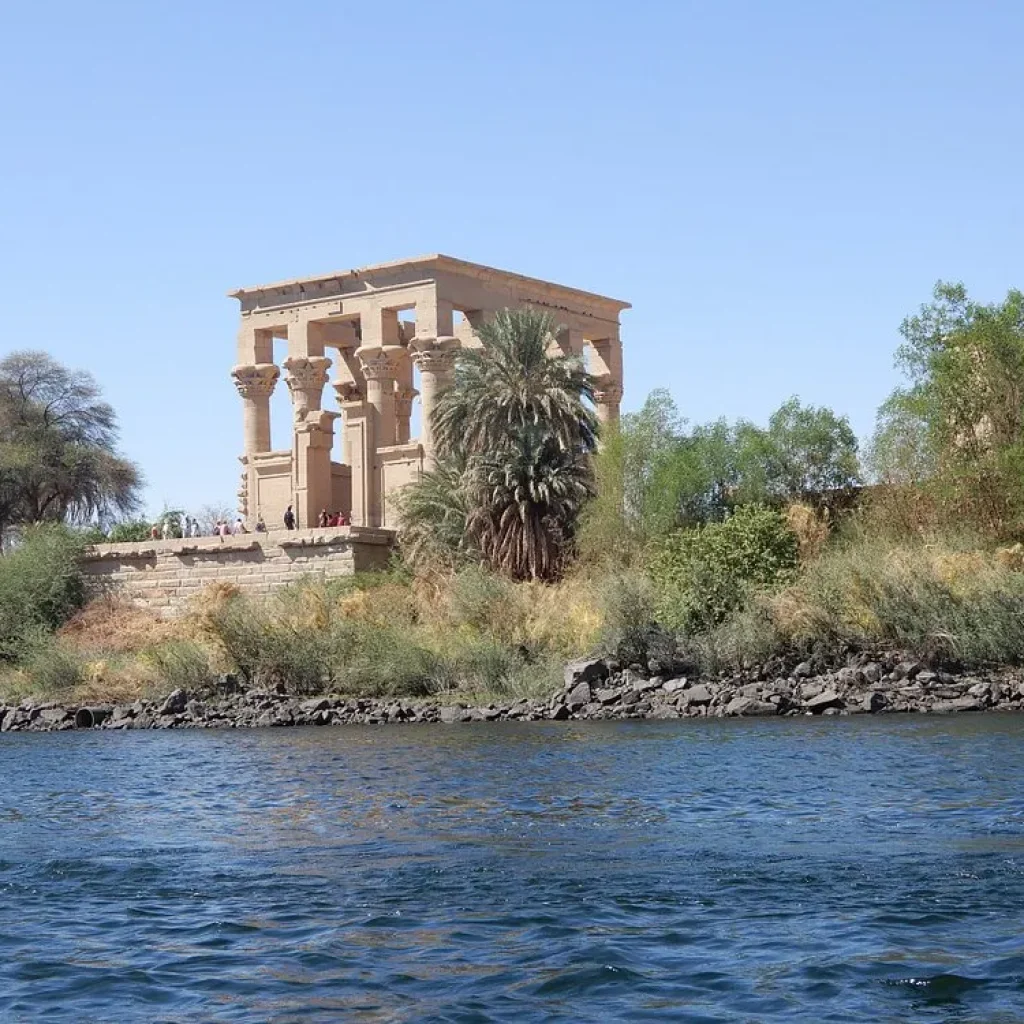
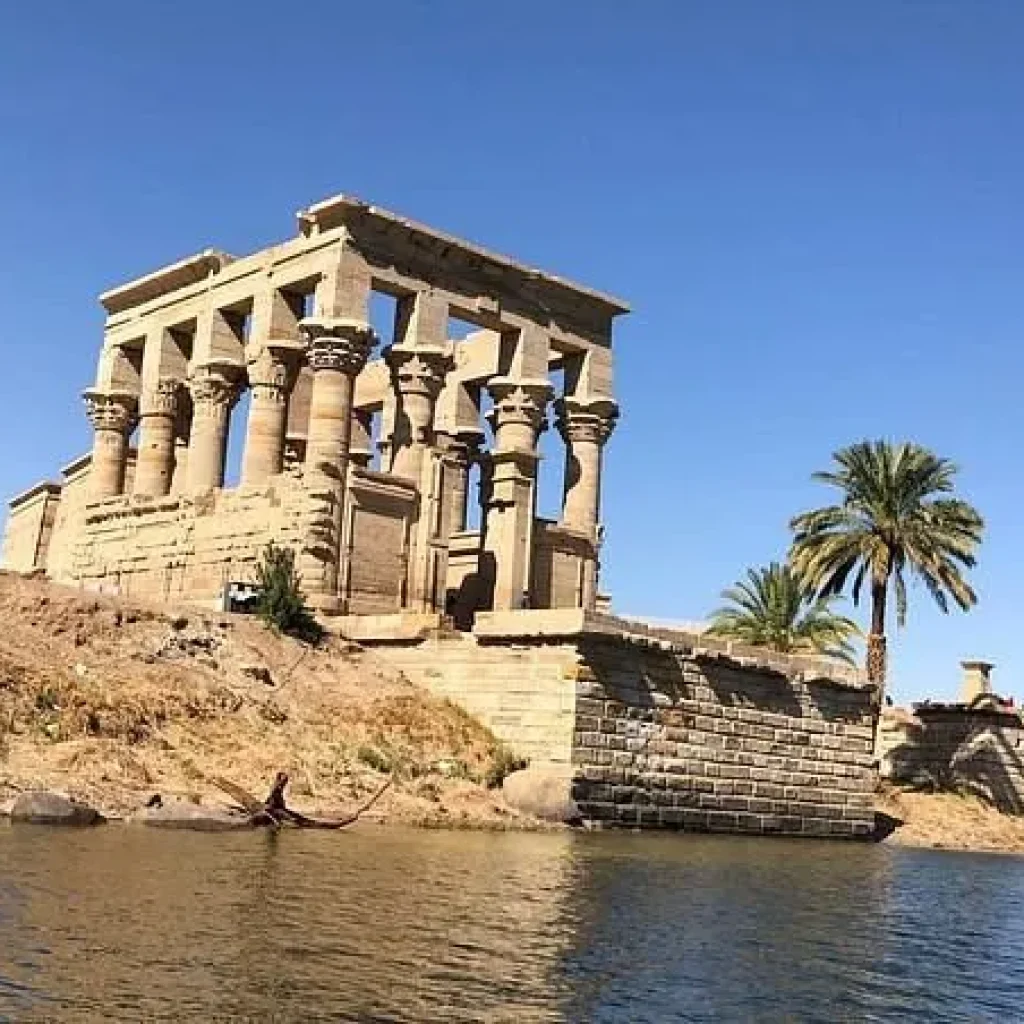
One of the most recognizable monuments on Agilkia Island is the Kiosk of Trajan.
The structure stands near the water with tall columns linked by screen walls, creating an elegant open pavilion that is especially photogenic from a boat.
It is associated with the Roman emperor Trajan, whose reliefs appear within the structure, although parts of the building may reflect earlier construction phases.
The kiosk probably had a ceremonial relationship with processions and river access, although its exact historical function remains discussed.
Today, it has become one of the visual symbols of agilkia island philae egypt because its open architecture frames the Nile beautifully.
Late-afternoon light can make the columns particularly striking.
What Was Lost in the Move?
The relocation saved the architecture, but no relocation can preserve every aspect of an original landscape.
The precise geology, shoreline, vegetation, water relationships, and historical setting of old Philae could not be transferred completely.
Agilkia was reshaped to echo the former island, but it remains a reconstructed setting.
This is important because archaeological conservation involves choices. Saving physical monuments sometimes requires accepting changes to context.
The philae island relocation succeeded extraordinarily well in preserving buildings and a strong sense of place, but visitors should understand that they are experiencing an ancient complex in a twentieth-century landscape reconstruction.
That tension is part of what makes the site intellectually fascinating.
How to Visit Agilkia Island
Travelers wondering agilkia island how to visit should begin from Aswan.
The archaeological site is reached through a marina area south of central Aswan. From there, visitors take a local motorboat across the water to Agilkia.
Transport to the marina can be arranged by taxi, private driver, guide, or organized tour.
Boat arrangements may be handled through a tour or negotiated locally depending on the visitor setup. Confirm prices and what is included before departure.
Allow enough time for both the crossing and the archaeological visit. Rushing through Philae in less than an hour misses much of what makes the complex rewarding.
Combining Philae with Other Aswan Sights
Agilkia fits easily into a broader Aswan itinerary.
Many travelers combine it with the Unfinished Obelisk because both help explain ancient Egyptian stonework and temple construction from different perspectives.
The Nubian Museum adds important cultural and historical context, while Elephantine Island provides archaeology and Nubian community life.
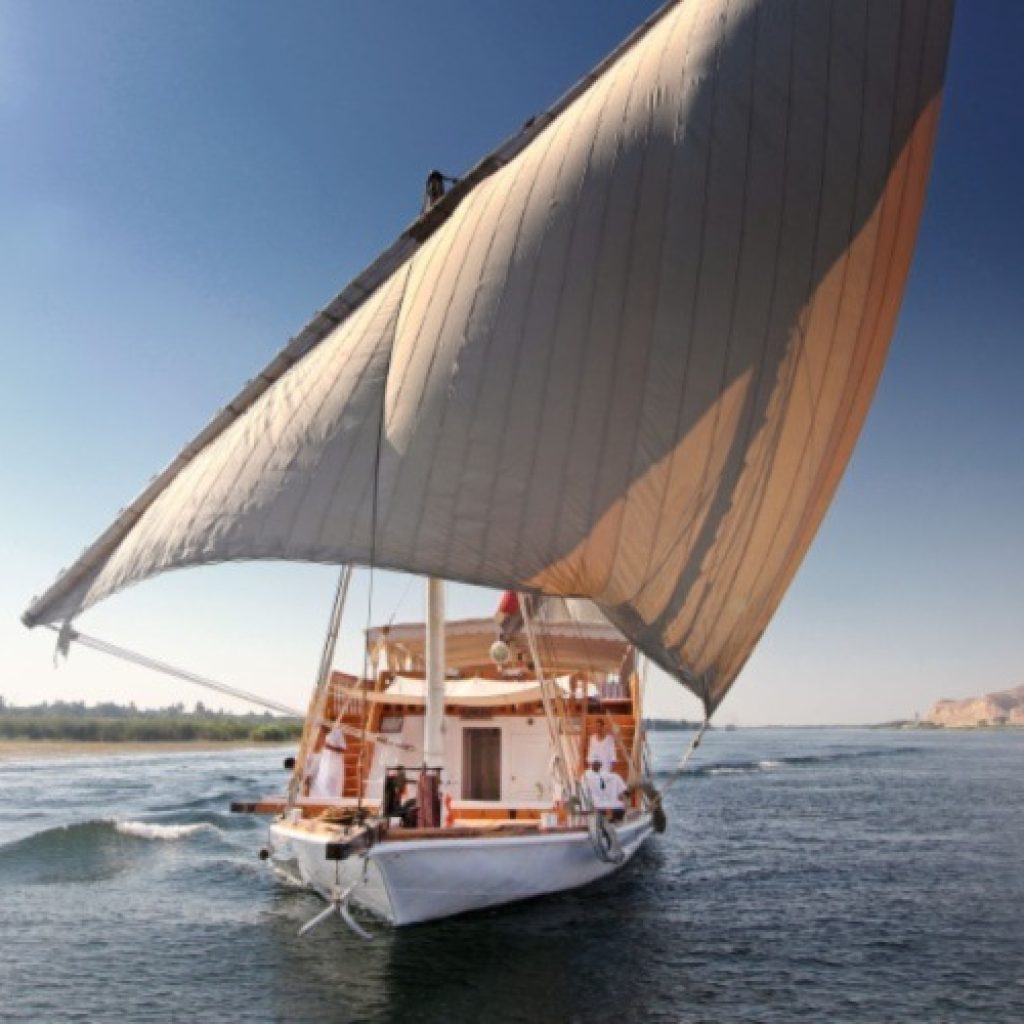
A felucca ride offers a slower contrast after a monument-heavy morning.
Visitors with more time can also explore the High Dam, Nubian villages, or use Aswan as the base for an Abu Simbel excursion.
A balanced itinerary avoids packing every attraction into one long day.
Why Agilkia Matters Today
Agilkia Island tells two historical stories at once.
The first is ancient. The temples reveal centuries of devotion to Isis, changing dynasties, Ptolemaic rule, Roman imperial presence, and later Christian reuse.
The second is modern. The island demonstrates how archaeologists, engineers, and international institutions responded when major development threatened irreplaceable heritage.
This combination makes agilkia island philae egypt different from sites that remain entirely in their original setting.
Visitors are not only looking at ancient architecture. They are also walking through one of the great conservation achievements of the twentieth century.
A Sanctuary Saved from the Nile
The strongest reason to visit Agilkia is that the relocation story never overwhelms the beauty of the ancient temples.
That knowledge makes the site more impressive rather than less authentic.
The stones are ancient. The religious history is ancient. The modern setting is part of a newer chapter in the monument’s life.
For travelers using this agilkia island philae egypt overview, the essential lesson is simple. Philae survived because preservation required imagination, engineering, international cooperation, and the willingness to move an entire sacred landscape piece by piece.
Frequently Asked Questions
Is Philae Temple actually on Philae Island today?
No. The temple complex visitors see today stands on Agilkia Island. The monuments were dismantled from the original Philae Island and reconstructed on Agilkia after changing water levels threatened their survival.
Why was Philae Temple moved?
The Aswan Low Dam caused repeated flooding, and the later High Dam project created a greater long-term threat. Relocating the temples offered the safest way to preserve the architecture above changing water levels.
How do you reach Agilkia Island?
Visitors travel from Aswan to the archaeological marina, then take a motorboat to the island. There is no direct road access to the temple complex itself.
How long should I spend at Philae Temple?
Allow around two hours on the island for a comfortable first visit. Travelers interested in reliefs, photography, or detailed history may want longer, especially when using an in-depth philae temple guide.
What are the most important monuments on Agilkia Island?
The Temple of Isis is the main attraction, alongside the First and Second Pylons, birth house, Kiosk of Trajan, and other chapels and structures reconstructed as part of the wider complex.
Is Agilkia Island worth visiting in Aswan?
Yes. The site combines impressive Ptolemaic and Roman architecture, mythology, Nile scenery, and one of the twentieth century’s most important archaeological rescue projects.
What is the best way to plan agilkia island how to visit?
Visit early or later in the afternoon, allow time for boat transfers, carry water and sun protection, and consider combining the island with the Nubian Museum, Unfinished Obelisk, or another nearby Aswan attraction.
0 Comment