

The religion of ancient Egypt was never a fixed list of simple characters. It was a living system of stories, local traditions, royal rituals, family relationships, sacred animals, and changing identities. Gods could merge with one another, take different forms, gain importance in one city, and later become central across the whole country. That complexity still makes the religion fascinating.
This guide introduces ten deities who shaped Egyptian religion, kingship, death beliefs, healing, writing, and temple life. It also connects each god or goddess with the places where worshippers encountered them, from Karnak and Abydos to Philae, Edfu, Dendera, Memphis, and Hermopolis. The aim is not to create a complete egyptian gods list, because hundreds of divine beings appeared across more than three thousand years of history. Instead, it focuses on the most important Egyptian deities for understanding the monuments travelers can still visit today.
How Egyptian Religion Worked
Egyptian religion was both national and local. A village might honor a protective deity, while a major city supported a temple estate dedicated to its principal god. The king acted as the ideal intermediary between humanity and the divine, although priests performed most daily rituals inside temples.
Temples were not simply places for public worship in the modern sense. They were considered divine residences where the god’s image received food, clothing, incense, music, and ritual attention. Understanding egyptian gods and temples therefore means seeing religion, economy, politics, and architecture as connected parts of one system.
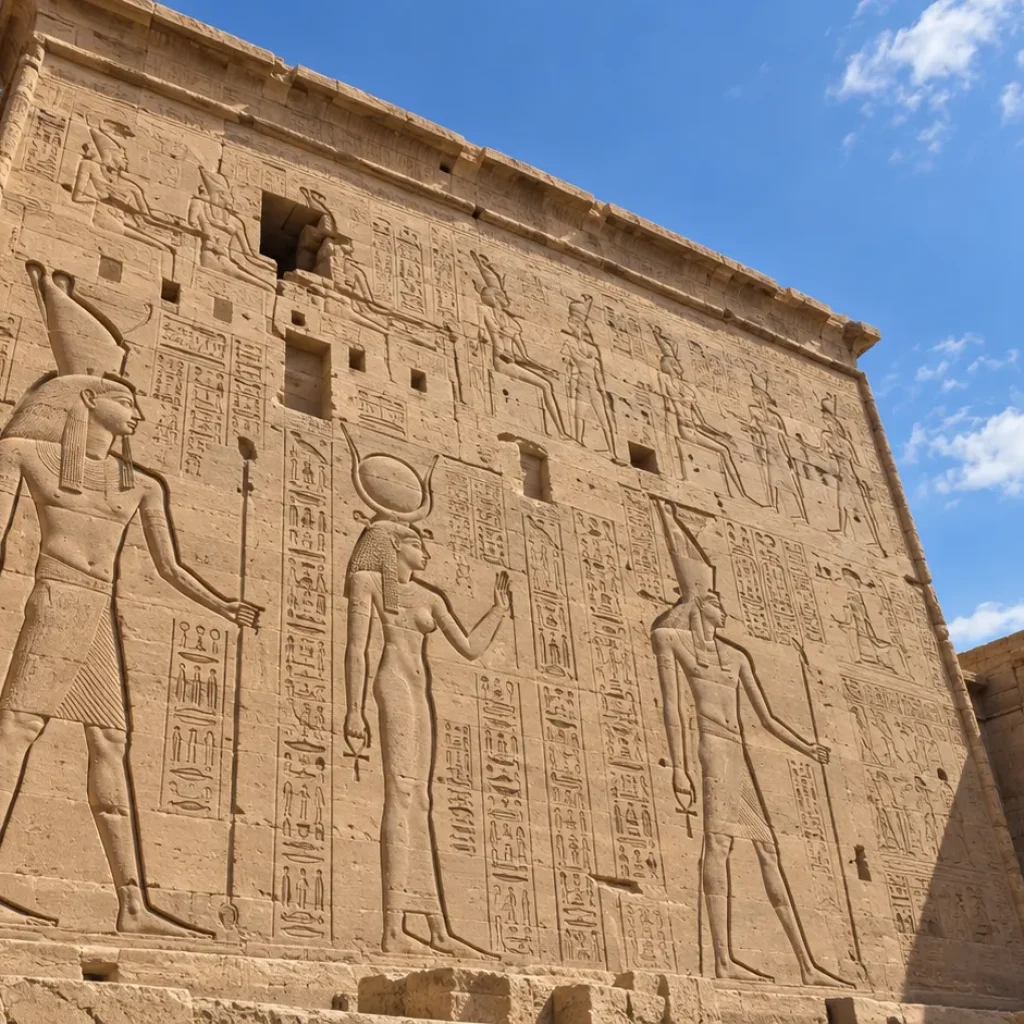
The gods were represented through human bodies, animal forms, mixed human-animal images, symbols, or combinations of these. A falcon could express Horus’s association with the sky and kingship, while a lioness could communicate Sekhmet’s dangerous power. Museum collections also show that animal forms helped Egyptians communicate ideas such as kingship, protection, ferocity, and divine presence. (The Metropolitan Museum of Art)
1. Ra: God of the Sun and Cosmic Renewal
Ra, also written Re, was one of the most influential ancient Egyptian gods. He represented the sun’s daily movement and the recurring renewal of creation. In myth, Ra traveled across the sky by day and through the underworld at night, confronting forces of chaos before rising again at dawn.
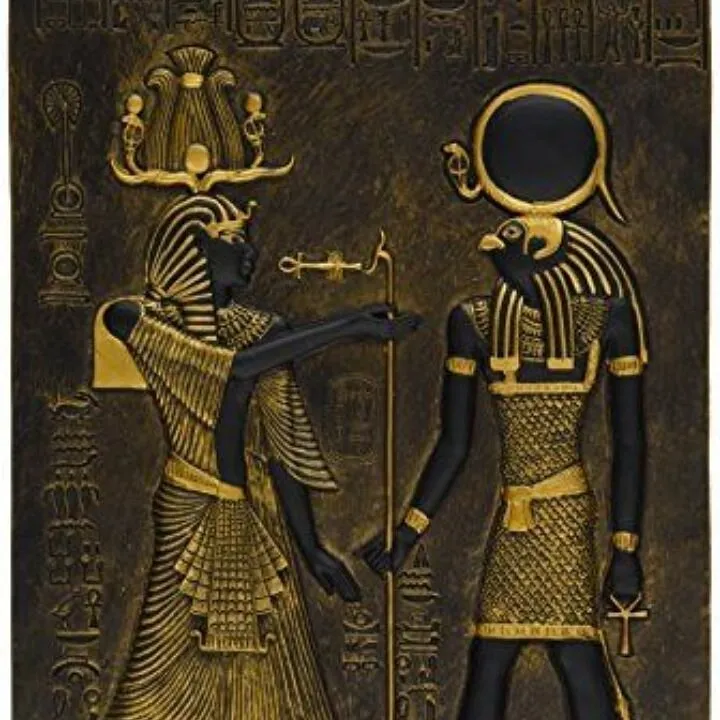
He was commonly shown as a man with a falcon head crowned by a solar disk. Over time, Ra combined with other gods, creating forms such as Amun-Ra and Ra-Horakhty. These combinations allowed different theological traditions to coexist instead of replacing one another.
Ra’s strongest early cult center was Heliopolis, near modern Cairo. Little survives of its once-important temple landscape, but the site shaped Egyptian solar theology for centuries. Obelisks, sun temples, and east-west temple alignments across Egypt reflect ideas associated with solar worship.
2. Amun: Hidden Power and Imperial Kingship
Amun began as a local Theban deity but rose to extraordinary importance during the Middle and New Kingdoms. His name is often interpreted as “the hidden one,” suggesting an invisible power that could fill the world without being fully seen. When united with Ra as Amun-Ra, he became a supreme creator and solar god closely linked to kingship.
The greatest surviving monument to Amun is Karnak Temple in Luxor. UNESCO describes ancient Thebes as the city of Amun, and Karnak became the center of a vast religious and economic institution. Pharaohs expanded the complex for centuries, adding pylons, obelisks, courts, chapels, and the famous Great Hypostyle Hall. (UNESCO World Heritage Centre)
Amun’s annual festivals helped connect temple ritual with the wider population. During the Opet Festival, sacred images traveled between Karnak and Luxor Temple, reinforcing divine kingship and renewal.
For travelers, Karnak is essential because it shows how religion and royal power worked together at monumental scale. Amun left one of the clearest architectural records.
3. Osiris: Lord of the Afterlife
Osiris was the god of the dead, regeneration, fertile land, and rightful kingship. According to one major myth cycle, his brother Seth killed him, and Isis restored his body through devotion and magic. Their son Horus later challenged Seth and inherited the throne.
Osiris did not simply represent death. He represented renewed life after death, just as vegetation returned and the Nile renewed Egypt’s fields. Deceased people hoped to become associated with Osiris and share in his resurrection.
He was usually shown as a mummiform king holding the crook and flail, often wearing the atef crown. Museum objects regularly identify him through this mummified form and royal insignia. (British Museum)
Abydos became the most important pilgrimage center associated with Osiris. Egyptians believed the area had a special connection to his burial and mysteries. The Temple of Seti I at Abydos contains magnificent reliefs and chapels dedicated to several gods, including Osiris. Nearby ritual landscapes supported festivals that reenacted parts of his story.
Any egyptian gods list centered on the afterlife must place Osiris near the top because his mythology shaped tomb decoration, funerary texts, judgment scenes, and hopes for eternal existence.
4. Isis: Magic, Motherhood, and Protection
Isis was the sister and wife of Osiris, the mother of Horus, and one of the most widely worshipped goddesses in the ancient Mediterranean world. Her mythology emphasized loyalty, healing, magical knowledge, motherhood, and protection.
In the Osiris story, Isis searched for her husband’s body, restored him, and protected their son Horus from danger.
She was often shown as a woman wearing a throne-shaped hieroglyph on her head. In later periods, she commonly wore cow horns surrounding a solar disk, a crown also associated with Hathor. British Museum objects show Isis protecting Osiris and wearing the solar disk and horns in later representations. (British Museum)
Philae, near Aswan, became one of the most famous sanctuaries of Isis. UNESCO identifies the Sanctuary of Isis at Philae among the major Nubian monuments saved during the international campaign connected with the Aswan High Dam. The temple complex was relocated to Agilkia Island, where visitors can still study reliefs, courts, gateways, and sacred spaces. (UNESCO World Heritage Centre)
Isis’s worship continued into the Roman period and spread far beyond Egypt, making her internationally successful.
5. Horus: Sky God and Protector of Kingship
Horus was closely associated with the sky, kingship, protection, and royal legitimacy. He was commonly shown as a falcon or a falcon-headed man.
Several forms of Horus developed in different regions and periods. Horus the Elder was distinct in some traditions from Horus, son of Isis and Osiris. Yet royal ideology consistently used falcon imagery and Horus names to express the king’s sacred authority. The British Museum describes Horus as a sky god, protector, and deity of kingship who was worshipped throughout Egypt. (British Museum)
The best-preserved temple dedicated to Horus is at Edfu, between Luxor and Aswan. Built mainly during the Ptolemaic period, it preserves monumental pylons, courtyards, halls, ritual rooms, and extensive inscriptions. Its reliefs include scenes connected with Horus’s conflict against Seth and the ceremonial defeat of chaos.
Edfu shows how late temples preserved older religious ideas, while its complete architectural sequence makes ritual movement easier to understand.
6. Hathor: Love, Music, Joy, and the Sky
Hathor was a goddess of love, music, dance, beauty, fertility, motherhood, the sky, and welcoming the dead. Her identity was broad and sometimes overlapped with Isis, especially in later periods.
She could appear as a cow, a woman with cow ears, or a woman wearing horns and a solar disk. The sistrum, a sacred rattle used in ritual and music, was strongly associated with her. Hathor could be gentle and joyful, but some myths also connected her with the fierce solar eye that punished humanity.
Dendera Temple, north of Luxor, is the principal surviving sanctuary associated with Hathor. Its decorated columns, roof chapels, crypts, astronomical imagery, and preserved ceiling colors make it one of Egypt’s most impressive temple complexes.
Among the most important Egyptian deities, Hathor demonstrates how one goddess could unite affection, sexuality, motherhood, danger, music, and death. The Metropolitan Museum notes that Hathor appeared from an early stage in Egyptian history and remained visible in temples and shrines. (The Metropolitan Museum of Art)
7. Anubis: Guardian of Embalming and Tombs
Anubis was associated with embalming, cemeteries, tomb protection, and guiding the dead. He was usually represented as a black jackal or a man with a jackal head. The black color symbolized fertile soil and regeneration as well as the dark appearance of preserved bodies.
Before Osiris became dominant as ruler of the dead, Anubis held an especially important funerary role. Even later, he remained essential in embalming rituals and judgment scenes. In the famous weighing of the heart, Anubis supervises the balance while Thoth records the result. Surviving funerary papyri show Thoth recording judgment and Horus presenting the deceased to Osiris. (British Museum)
Anubis did not leave one monumental temple as famous as Karnak or Edfu. His cult was associated with places including Cynopolis in Middle Egypt and the Anubieion at Saqqara. Travelers encounter him most often in tomb paintings, coffins, funerary papyri, museum objects, and embalming scenes.
His importance shows that not every major deity can be understood through one surviving temple. Some were most visible through rituals surrounding death.
8. Thoth: Writing, Wisdom, and Sacred Knowledge
Thoth was the god of writing, knowledge, calculation, language, the moon, and divine judgment. Scribes considered him their patron, and temple traditions credited him with recording, measuring, and maintaining cosmic order.
He was shown as an ibis-headed man or as a baboon. In judgment scenes, Thoth records whether the deceased’s heart balances against the feather of truth. British Museum objects frequently show the ibis-headed Thoth writing or standing before Osiris, Isis, and Horus. (British Museum)
Thoth’s principal cult center was Hermopolis, known in ancient Egyptian as Khemenu, in Middle Egypt. The city’s surviving remains are less visually complete than temples such as Edfu, but the region around Hermopolis and Tuna el-Gebel preserves important monuments, tombs, animal burials, and evidence of religious life.
For travelers interested in hieroglyphs, scribal culture, and temple inscriptions, Thoth is essential to understand.
9. Ptah: Creator God and Patron of Craftsmen
Ptah was the principal god of Memphis and a creator deity associated with thought, speech, craftsmanship, architecture, and skilled work. In Memphite theology, creation occurred through Ptah’s heart and tongue: he conceived the world in thought and brought it into being through speech.
He was usually shown as a mummiform man wearing a close-fitting cap and holding a composite staff.
Memphis, south of modern Cairo, was one of Egypt’s great capitals and remained religiously important for centuries. Ptah’s main temple there was known as Hut-ka-Ptah, a name sometimes connected with the later word “Egypt.” Much of the temple has disappeared, but the open-air museum and archaeological zone preserve statues, architectural fragments, and evidence of the city’s former importance.
Ptah was especially significant to craftsmen, including the skilled community at Deir el-Medina near Luxor. His association with making and design connected divine creation with human artistry.
Any study should include Memphis, because Egyptian religion developed through several regional centers rather than through Thebes alone.
10. Sekhmet: Destruction, Healing, and Royal Power
Sekhmet was a lioness goddess associated with war, royal power, plague, fierce heat, destruction, and healing. Her name can be translated as “the powerful one.” She embodied the dangerous force of the sun and could attack the enemies of gods and kings.
Yet Sekhmet was not only destructive. Because she could send disease, she could also remove it. Priests connected with her cult were associated with healing knowledge, and rituals sought to calm her dangerous energy.
She was shown as a lioness-headed woman crowned with a solar disk. Hundreds of Sekhmet statues were commissioned during the reign of Amenhotep III, many of which were placed in Theban temple settings. Museum scholarship also associates her lioness form with both ferocity and protective, maternal power. (The Metropolitan Museum of Art)
Sekhmet was closely connected with Ptah as his consort in Memphite theology, and their son was Nefertum. She was also linked with Mut, the great goddess of Thebes, and lioness imagery could move between divine identities.
Her presence in an egyptian gods list reminds us that Egyptian religion did not divide gods neatly into good and evil. Divine power could protect, punish, heal, and destroy depending on context.
How the Gods Changed Over Time
The most important Egyptian deities did not remain unchanged. Local gods gained national importance when their cities became politically powerful. Deities merged through combinations such as Amun-Ra, while goddesses borrowed crowns, roles, and myths from one another.
Foreign rule did not end Egyptian religion immediately. Ptolemaic and Roman rulers built or completed major temples, presented themselves in pharaonic style, and participated in traditional ritual imagery. Edfu, Dendera, Kom Ombo, and Philae show how ancient forms continued while political realities changed.
Different creation stories or divine family relationships could remain valid in different temples and theological contexts.
Visiting Egyptian Gods and Temples Today
Travelers can build an itinerary around these religious centers. Karnak and Luxor reveal Amun’s Theban power. Abydos brings visitors into the landscape of Osiris. Dendera preserves Hathor’s magnificent sanctuary, while Edfu presents Horus through one of Egypt’s most complete temples. Philae shows the enduring devotion to Isis, and Memphis recalls Ptah’s role in an ancient capital.
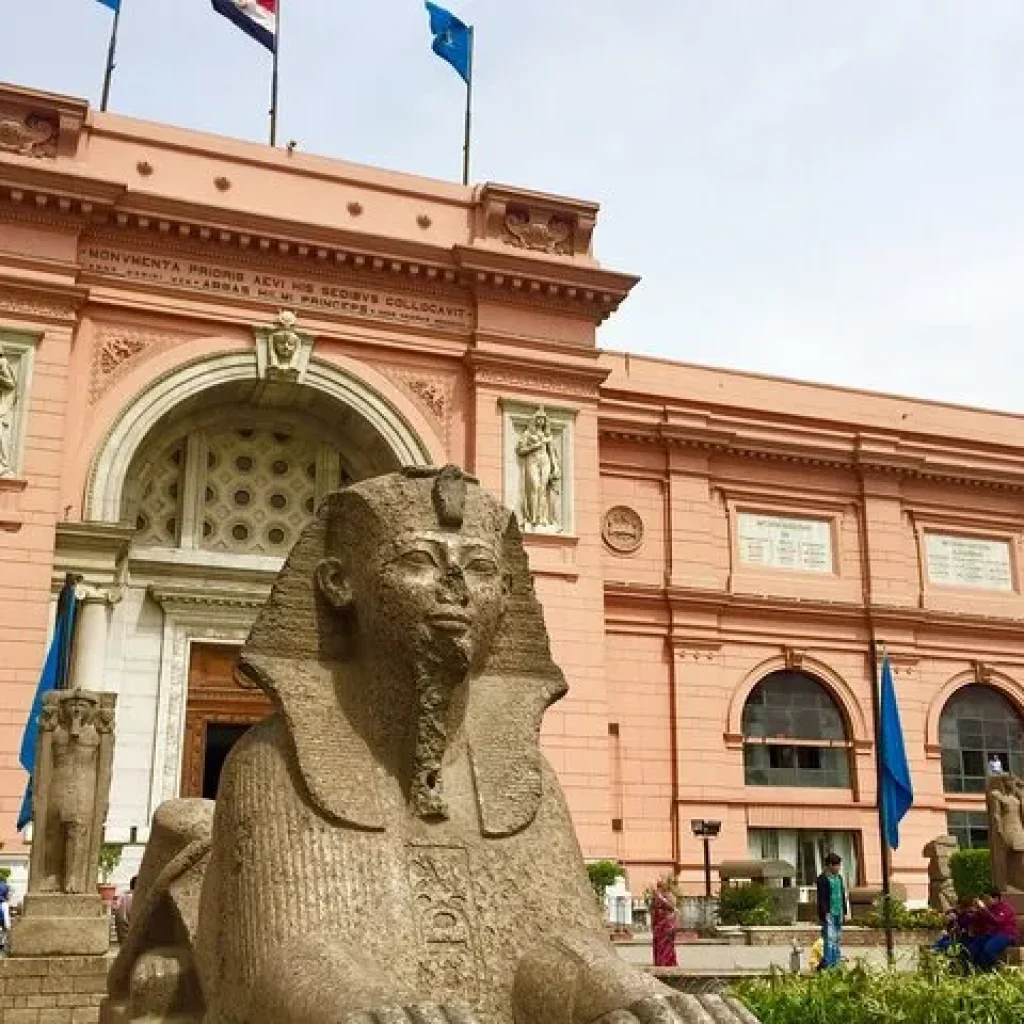
Museums add the gods whose temples are less complete. The Grand Egyptian Museum, the Egyptian Museum in Cairo, the National Museum of Egyptian Civilization, Luxor Museum, and regional collections preserve statues, coffins, papyri, amulets, and ritual objects connected with Anubis, Thoth, Sekhmet, Ra, and many others.
When visiting these sites, notice how location strengthened meaning. Temples near the Nile used processional routes and sacred boats, while western-bank monuments often related to death and renewal. Inner rooms became darker, smaller, and more restricted as worshippers approached the sanctuary. Outer courts, pylons, statues, and festival roads presented divine power publicly. Reliefs frequently show kings offering food, incense, flowers, wine, or symbols of order, even though priests carried out daily ceremonies. These scenes were not simple decoration. They renewed the relationship between the ruler, the deity, and the cosmos. Looking for repeated gestures, crowns, animals, and hieroglyphic names helps visitors follow the visual language without reading every inscription, making each temple visit more rewarding and memorable.
A guide or Egyptologist can help identify crowns, animal forms, sacred symbols, and family relationships. Once travelers recognize a solar disk, ibis head, lioness face, falcon crown, or mummiform body, temple walls become easier to read.
Why These Ten Deities Matter
These ten figures do not form a definitive ranking. Other gods such as Seth, Nephthys, Mut, Khnum, Sobek, Bastet, Ma’at, and Khonsu were also deeply important. However, this selection covers the central themes that shaped Egyptian religion: creation, kingship, solar renewal, death, resurrection, motherhood, protection, writing, craftsmanship, violence, and healing.
Studying the ancient Egyptian gods also changes how visitors see monuments. A temple is no longer simply an impressive stone building. It becomes a carefully ordered home for divine presence, where architecture, ritual, landscape, and political authority worked together.
The best way to use this guide is not to memorize every name. Focus instead on each deity’s main symbols, city, and surviving sanctuary. Those connections create a practical map through Egyptian history.
Gods, Temples, and the Egyptian World
The ancient Egyptian gods expressed how people understood nature, authority, family, illness, death, knowledge, and renewal. Their stories were not isolated myths; they shaped festivals, royal titles, funerary hopes, temple economies, art, and daily prayers.
From Ra’s sunrise and Amun’s hidden power to Isis’s protection and Osiris’s resurrection, these deities offered ways to explain an ordered world constantly threatened by chaos. Their temples gave those ideas physical form in stone.
Visiting Karnak, Abydos, Dendera, Edfu, Philae, Memphis, and the museums of Egypt reveals that religion was never separate from Egyptian civilization. It was one of the main structures through which society understood life itself.
That is why the gods still matter. They help modern travelers move beyond beautiful reliefs and enter the intellectual and spiritual world that created them.


0 Comment