
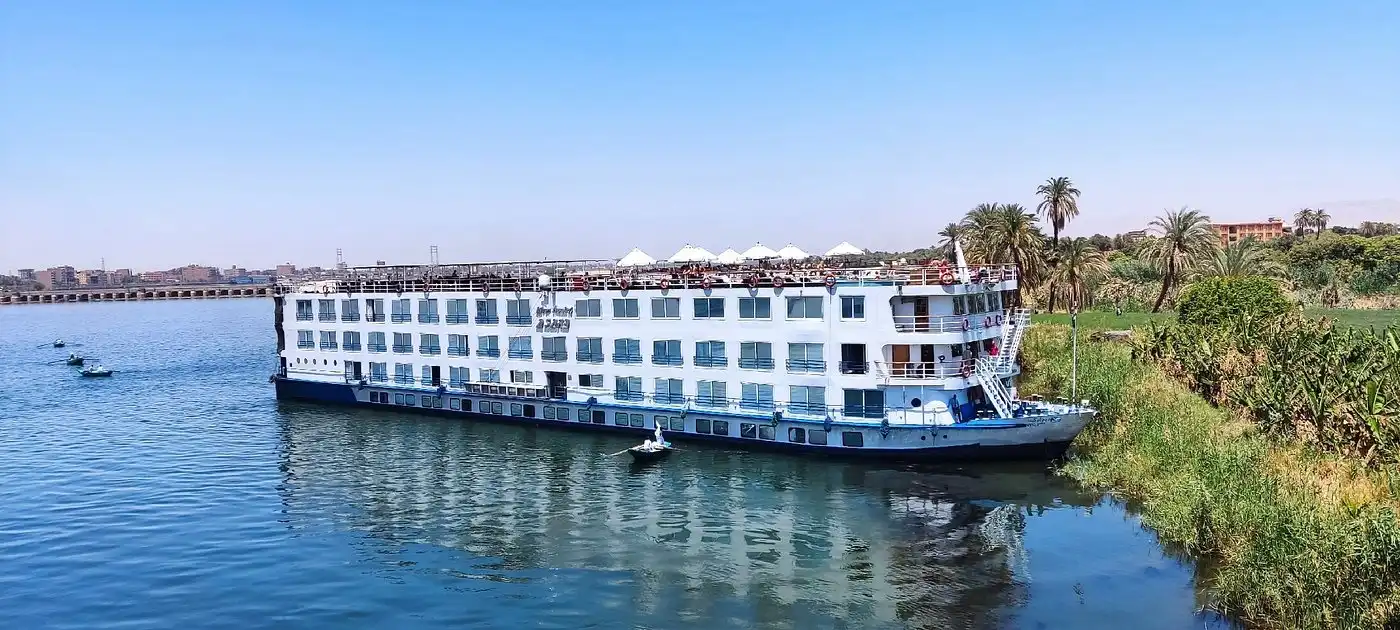

A 7-night Dahabiya Nile cruise is a slow, private sailing journey between Luxor and Aswan. Instead of rushing between temples on a large ship, you travel with fewer guests, quieter moorings, personalized service, and extra stops at islands, villages, and ancient sites that standard Nile cruises often miss.The dahabiya nile cruise experience is defined by a slow, rhythmic pace that large ships cannot replicate, offering guests a 7-day journey that focuses on silence, hidden riverbanks, and high-end privacy. Unlike the standard 3-night rush, a 7-day private cruise allows the wind to dictate the schedule, moving between the world-famous temples of Luxor and Aswan while stopping at remote islands where you are often the only traveler in sight. Many people ask, what is it like on a dahabiya? It feels less like a commercial tour and more like staying in a floating boutique villa, where the crew knows your name, the chef cooks to your preference, and the history of Egypt unfolds right outside your cabin window. In this guide, we walk you through a detailed dahabiya cruise itinerary to show you exactly how the magic happens day by day.
Day 1 — Boarding in Luxor and Sailing at Dusk
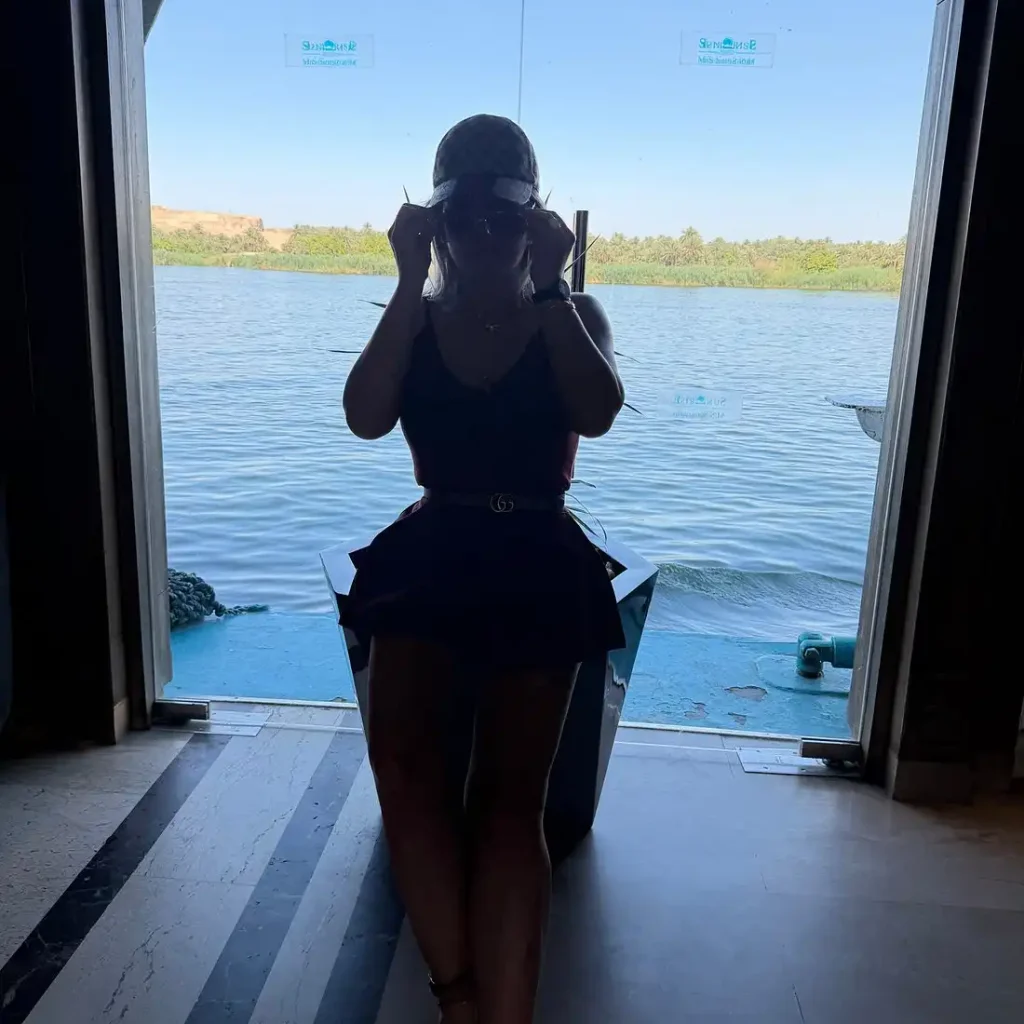
Your dahabiya nile cruise experience begins far from the chaotic tourist hubs. While massive cruisers dock five-deep at the main Luxor corniche, your Dahabiya waits at a private, quiet mooring on the West Bank or a secluded pier. Upon arrival, the transition from the bustling streets of Luxor to the polished teak decks of the boat is immediate. You are greeted by the Boat Manager and the crew with chilled hibiscus tea (Karkadeh) and moist towels scented with orange blossom.
The first afternoon is dedicated to the legends of the East Bank. Your private Egyptologist will lead you through the Great Hypostyle Hall of Karnak, explaining the astronomical alignments of the obelisks. After exploring the Luxor Temple as the late afternoon sun turns the stone to gold, you return to your vessel. As the “Golden Hour” begins, the Captain gives the order to untie the lines. This is the moment travelers realize what a private cruise is all about: there is no jarring vibration of a heavy engine. The massive lateen sails unfurl, catching the northern breeze, and you glide silently southward. Dinner is served on the upper deck under a canopy of stars, featuring fresh river fish and organic vegetables sourced from nearby banks.
Day 2 — Esna Lock and Temple of Khnum
The Esna Lock is a major milestone in any dahabiya cruise itinerary. While large ships often spend hours in a “holding pattern” waiting for their turn to pass through the lock, the smaller size and specialized handling of a Dahabiya often allow for a more streamlined experience. While the boat waits its turn, you head ashore to visit the Temple of Khnum. This Greco-Roman marvel is unique because it sits nearly nine meters below the current street level of the modern town. The pillars here are famous for their incredibly preserved colors and detailed zodiac calendars. Once the boat passes the lock, you spend the afternoon sailing toward the village of El Hegz. Here, the boat moors at a quiet island for the night, offering a level of serenity that only a private nile cruise can provide.
Day 3 — Edfu Temple and an Afternoon on the River
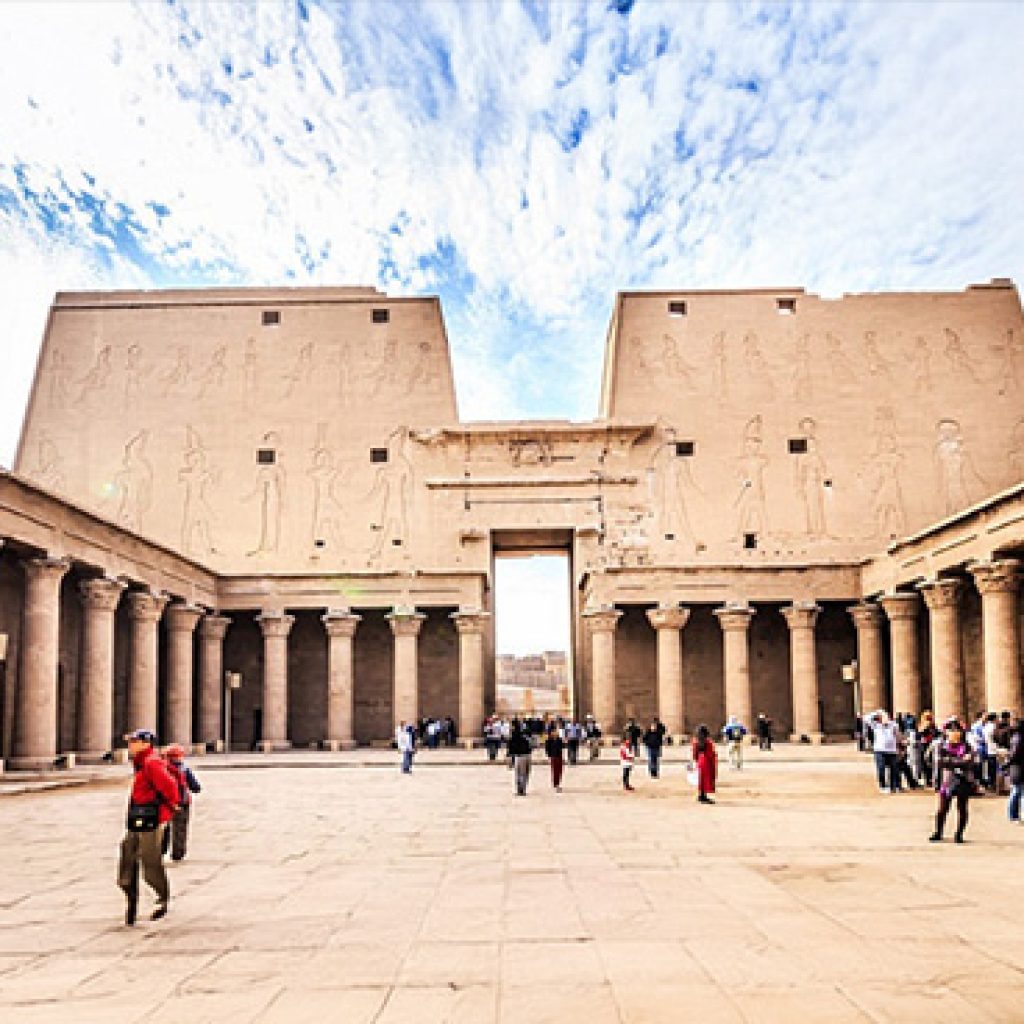
On the third morning, the rhythm of ancient life becomes your own. After a breakfast of fresh fruits and Egyptian coffee, you arrive in the town of Edfu. To reach the Temple of Horus, the most perfectly preserved temple in all of Egypt, you take a traditional horse-drawn carriage (Hantour) through the bustling local market. This short ride is a vibrant contrast to the tranquility of the boat.
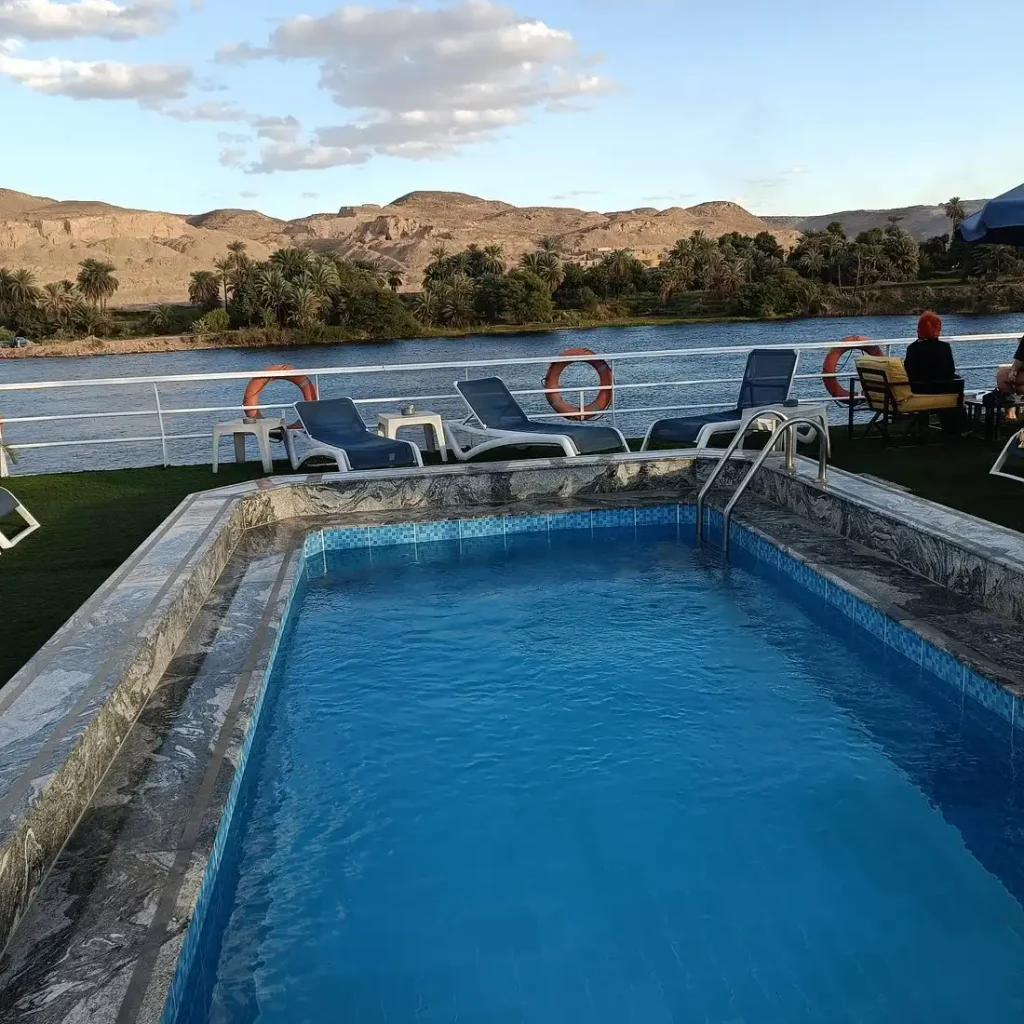
Inside Edfu Temple, your guide will walk you through the battle between Horus and Seth, carved in exquisite detail on the massive pylon walls. After returning to the ship, the rest of the day is dedicated to the art of “Sailing.” Many people ask, what is it like on a dahabiya when there are no temples to see? It is a masterclass in relaxation. You can lounge on the sofas, watch the changing landscape of palm groves and desert hills, or observe the “Sakiya” water wheels that have irrigated these lands for millennia. Because this is a private nile cruise, the captain may decide to stop at a local farm for an hour, allowing you to walk among the banana and mango trees—a spontaneous moment impossible on a larger ship.
Day 4 — Kom Ombo Temple at Sunrise
While standard tours often reach Kom Ombo in the heat of the afternoon or late at night, your dahabiya cruise itinerary is designed for the best light. You arrive at the “Temple of the Two Gods” just as the sun begins to peek over the Eastern Desert. The temple is unique because it is perfectly symmetrical, dedicated to both Sobek the crocodile god and Haroeris the falcon god.
After exploring the temple and the fascinating Crocodile Museum nearby—which houses dozens of mummified ancient crocodiles—you return to the ship for a “Farmer’s Lunch” served on a quiet sandbank. The afternoon is spent sailing toward the ancient sandstone quarries of Gebel el-Silsila. This is a definitive part of the dahabiya nile cruise experience. Since large ships are too big to dock here, you will likely be the only people exploring the rock-cut chapels of Horemheb and the massive stelae overlooking the river. You spend the night moored at the foot of the mountain, surrounded by history and silence.
Day 5 — Approaching Aswan: Nile Feluccas and First Glimpse of Kitchener’s Island
As you enter the Aswan region on the fifth day, the geography of the Nile shifts dramatically. The limestone cliffs give way to ancient granite boulders that rise from the water like prehistoric giants. This is the land of the Nubians. You will notice dozens of smaller Nile feluccas dancing in the wind around you, their white sails contrasting with the deep blue of the river.
As the boat glides toward the Aswan cataracts, you catch your first glimpse of Kitchener’s Island, home to the Aswan Botanical Gardens. What is it like on a dahabiya as you navigate these narrower channels? It is exhilarating. The boat maneuvers with grace through the islands, passing the ruins of Elephantine Island and the historic Old Cataract Hotel. You moor in a quiet area near a Nubian village, where the golden sand dunes of the West Bank meet the water’s edge. This evening is often spent enjoying a traditional Nubian meal on the deck, accompanied by the sounds of the Oud and the Duff.
Day 6 — Aswan: Philae Temple and Nubian Village
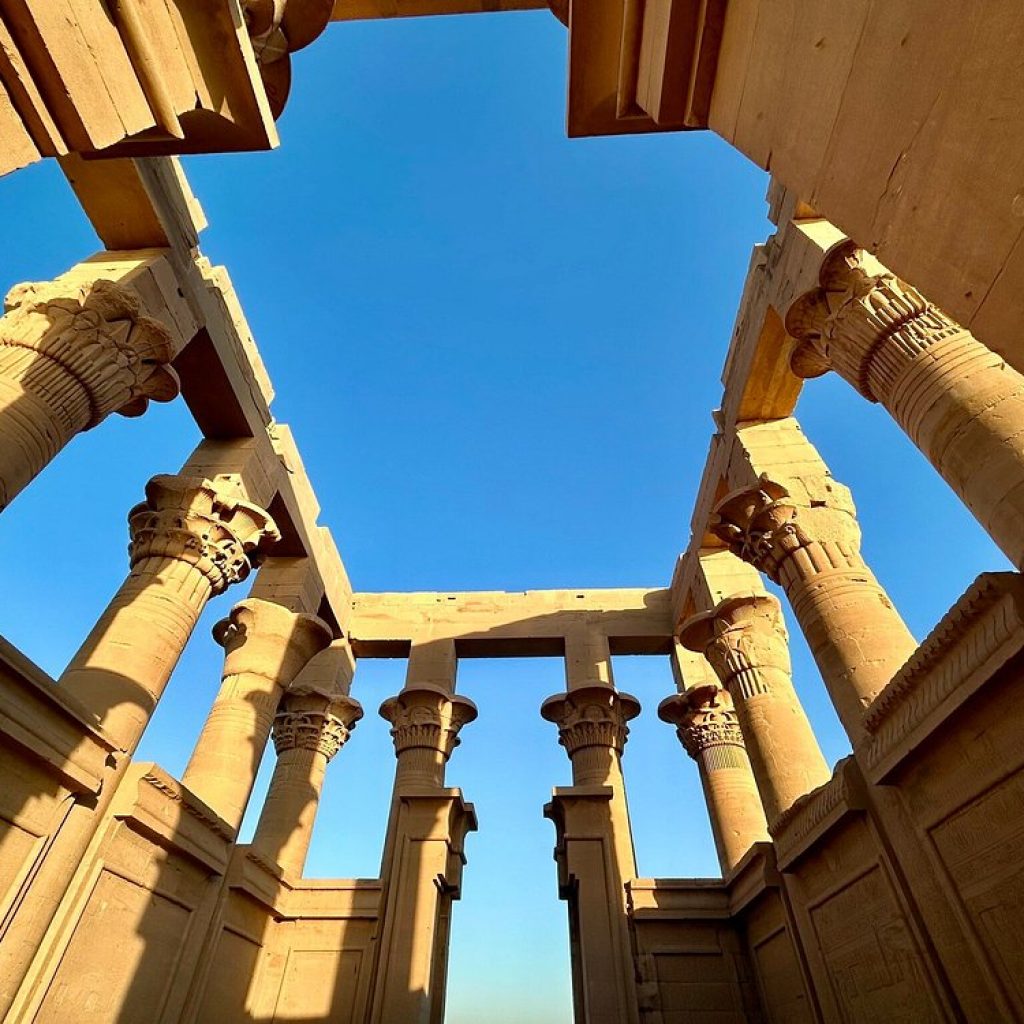
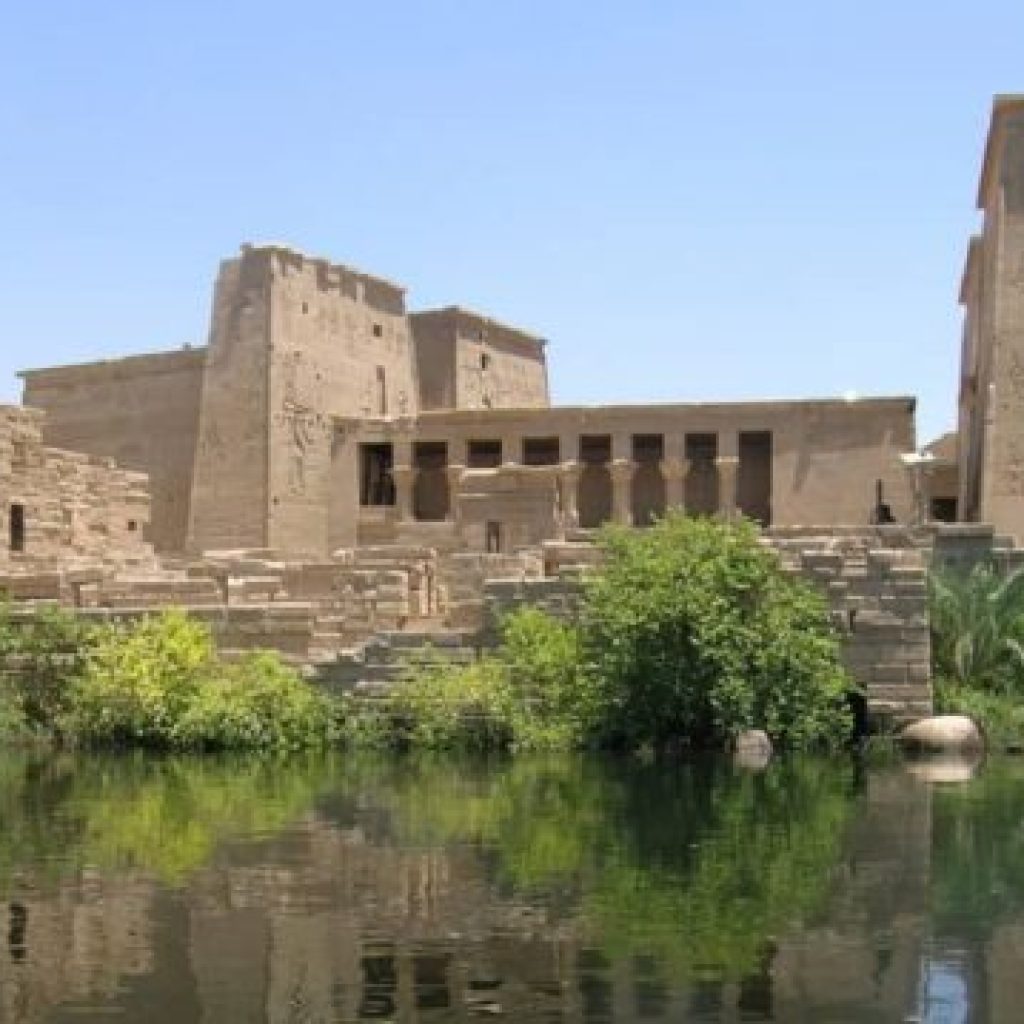
The sixth day of your dahabiya cruise itinerary focuses on the “Pearl of Egypt.” After breakfast, you take a short motorboat ride to the island of Philae. This temple, dedicated to the goddess Isis, was rescued from the rising waters of the High Dam in a massive UNESCO project. The setting, surrounded by water and granite rocks, is breathtakingly beautiful.
In the afternoon, your private nile cruise takes you deeper into Nubian culture. You visit a local village on the West Bank, known for its vibrant blue and yellow houses and the legendary hospitality of its people. You’ll have the chance to visit a local home, sip traditional ginger coffee (Gabbana), and learn about the unique Nubian language and customs. This is not just a tour; it is a cultural exchange. The evening concludes back on the Dahabiya with a “Captain’s Farewell Dinner,” where the crew performs traditional songs and dances, celebrating the bond formed over the week.
Day 7 — Abu Simbel Day Trip and Farewell Dinner
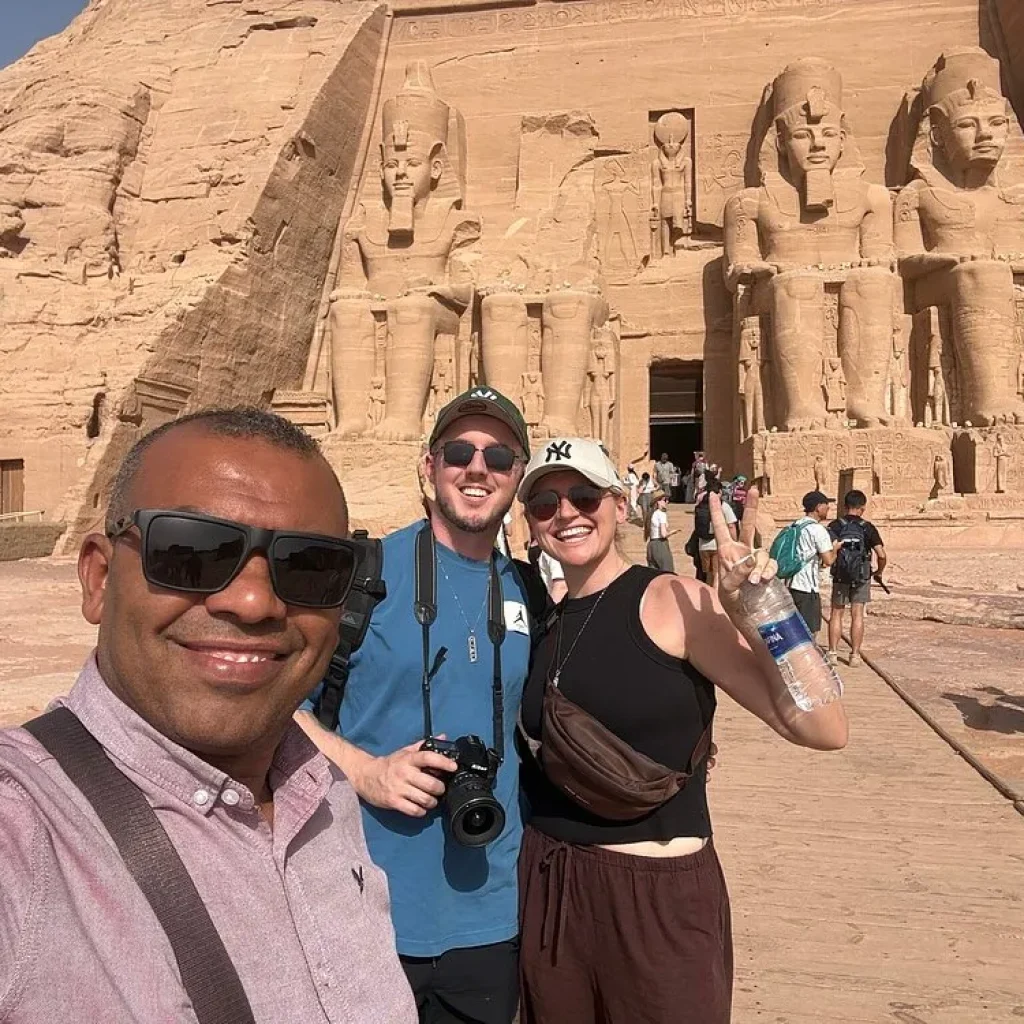
Though the sailing portion of the journey is nearing its end, the highlights continue. The final day of your dahabiya nile cruise experience often begins before dawn for the journey to Abu Simbel. Whether you travel by air or across the desert road, seeing the four colossal statues of Ramses II carved into the mountainside is a life-changing event.
Returning to the Dahabiya in the late afternoon, you have one final evening to soak in the atmosphere. The chef typically prepares a multi-course feast, often including a whole roasted lamb or traditional Egyptian stuffed vegetables (Mahshi). You spend the final night docked in Aswan, with the lights of the city reflecting in the water. What is it like on a dahabiya last night? It is a bittersweet moment of reflection, realizing that you haven’t just seen Egypt; you have lived its rhythm for a week.
What Makes a Dahabiya Different from Everything Else
The primary difference lies in the philosophy of time. A large cruise ship is built for efficiency; it must move 150 people through a checklist of sites to stay on schedule. A private nile cruise, however, is built for depth and soul. You don’t “travel” to the sites; you exist within the landscape that created them.
When people ask, what is it like on a dahabiya, the answer is always about the “in-between” moments. It’s the ability to stop at a local farm on a whim because the pomegranates are in season. It’s the silence of the lateen sails catching the wind at 4:00 AM. It’s the intimacy of having only 10 fellow passengers who have become friends. A 7-day dahabiya cruise itinerary gives you the gift of the Nile as it was meant to be seen: slowly, respectfully, and beautifully. It is an investment in a way of travel that honors the history and the people of Egypt.
FAQ: 7-Day Dahabiya Nile Cruise Experience
What is it like on a Dahabiya Nile cruise?
A Dahabiya feels like a private boutique villa on the Nile. It is slower, quieter, and more intimate than a large cruise ship, with fewer guests, personalized service, and stops at smaller riverbanks and islands.
How many days do you need for a Dahabiya cruise?
Most Dahabiya cruises work best as 5 to 7-night journeys because the boat moves slowly and follows the rhythm of the wind. A longer itinerary allows time for hidden stops between Luxor and Aswan.
What do you see on a 7-day Dahabiya cruise?
A typical 7-day Dahabiya itinerary may include Luxor, Karnak, Esna, Edfu, Kom Ombo, Gebel el-Silsila, Aswan, Philae Temple, a Nubian village, and an optional Abu Simbel day trip.
Is a Dahabiya better than a regular Nile cruise?
A Dahabiya is better for travellers who want privacy, silence, slow travel, and hidden stops. A regular Nile cruise is better for travellers who prefer larger facilities, fixed schedules, and a faster itinerary.
Can a Dahabiya visit Abu Simbel?
A Dahabiya does not sail to Abu Simbel. Abu Simbel is usually added as a day trip from Aswan by road or flight.
Ready to see the Nile through a different lens? Learn more about our dahabiya fleet and start planning your private journey today.
0 Comment