

The Hanging Church is one of Cairo’s most remarkable historical and religious landmarks. Located in the heart of Old Cairo, the church represents centuries of Christian tradition, architectural development, and cultural continuity. Unlike many ancient monuments that survive only as archaeological remains, the Hanging Church remains an active place of worship where visitors can experience both history and living faith.
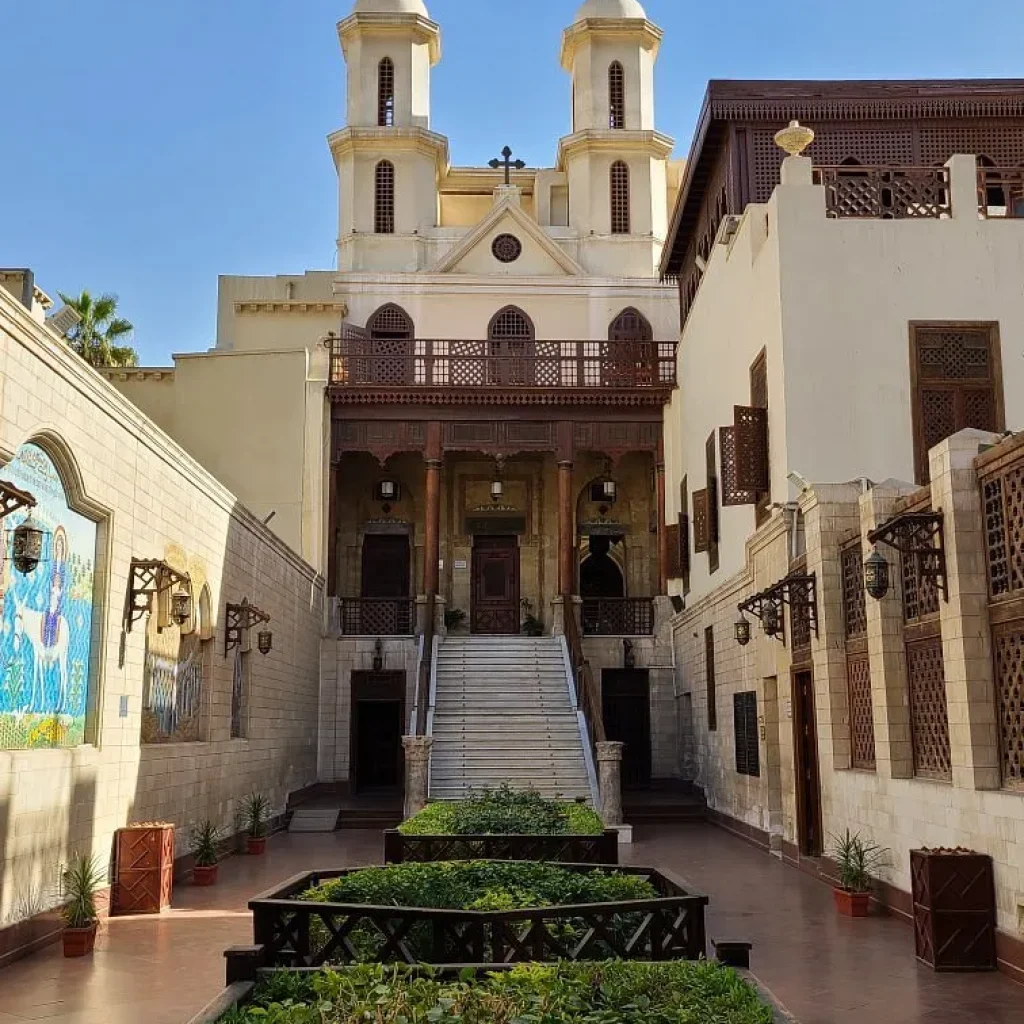
Known officially as the Church of the Virgin Mary, the site is one of the most important Coptic Christian churches in Egypt. Its unusual name comes from its location above the southern gatehouse of the Roman Fortress of Babylon, creating the impression that the church is suspended above the ground.
This hanging church cairo guide explores the church’s origins, architecture, religious importance, historical changes, visitor experience, and practical information for travelers interested in discovering one of Cairo’s oldest Christian sites.
For anyone interested in Egyptian history beyond pharaohs and ancient temples, the Hanging Church provides a different perspective. It tells the story of Christianity in Egypt, the development of Coptic identity, and the survival of religious traditions through centuries of political and cultural change.
Where Is the Hanging Church Located?
The Hanging Church is located in Old Cairo, within the area known as Coptic Cairo. The neighborhood contains several important Christian landmarks, including ancient churches, monasteries, museums, and religious buildings.
The church stands near the remains of the Roman Fortress of Babylon, an important military structure built during the Roman period. Its location reflects the historical importance of the area as a center of early Christianity in Egypt.
Visitors usually reach the church through the narrow streets of Coptic Cairo, where the atmosphere differs greatly from modern Cairo’s crowded districts. The surrounding area offers a concentrated journey through Egypt’s religious history.
The location makes the church easy to combine with nearby attractions such as the Coptic Museum, the Church of St. Sergius and Bacchus, and the Ben Ezra Synagogue.
Why Is It Called the Hanging Church?
The name “Hanging Church” comes from the way the building appears elevated above the ground. The church was constructed on top of the old southern gatehouse of the Fortress of Babylon, with its nave positioned above the passageway below.
The Arabic name is al-Muallqa Church, meaning “the Suspended Church.” This name refers to its unusual architectural position rather than the church physically hanging in the air.
The elevated construction gave the building symbolic and practical importance. Being positioned above the fortress created a strong connection between the Christian community and one of the most important defensive structures in ancient Cairo.
Although visitors today enter through a modern approach, the original relationship between the church and fortress remains one of the most fascinating aspects of the site.
The History of the Hanging Church
The hanging church history reflects the long development of Christianity in Egypt. Although the exact date of the earliest structure is debated, the church is generally believed to have roots dating back to the early centuries of Christianity.
Over time, the building was rebuilt, expanded, and restored many times. Like many historic religious sites, its current appearance represents layers from different periods rather than a single moment of construction.
During the medieval period, the church became especially significant within the Coptic Orthodox community. It served as the seat of the Coptic patriarch for several centuries and played an important role in religious leadership.
The church witnessed political changes, periods of prosperity, and times of difficulty. Its survival demonstrates the resilience of Egypt’s Christian community and the importance of preserving religious heritage.
The Church Through Different Historical Periods
Throughout its long existence, the Hanging Church experienced many historical changes that shaped its current identity. During the medieval period, it became one of the most influential churches in Egypt and played an important role in the organization of the Coptic Orthodox community.
Several Coptic patriarchs used the church as a religious center, making it a place where important decisions and ceremonies took place. Its importance continued despite political changes and periods when Christian communities faced challenges.
The church’s survival is also connected to continuous restoration efforts. Different generations repaired and preserved its structure, artwork, and religious objects to protect its historical and spiritual value.
The Church’s Role in Coptic Christianity
The Hanging Church is one of the most important symbols of Coptic Christianity in Egypt. The Coptic Orthodox Church traces its origins to the early Christian tradition established in Egypt, traditionally associated with Saint Mark the Evangelist.
The church became a major spiritual center because of its connection with Coptic patriarchs and religious ceremonies.
Unlike a historical monument that visitors simply observe, the Hanging Church remains part of an active religious community. Services, prayers, and celebrations continue, connecting modern worshippers with generations who used the same sacred space.
This combination of historical significance and living tradition makes the church especially meaningful. Visitors are not only seeing ancient architecture but also witnessing a continuing religious practice.
Architectural Features of the Church
The architecture of the Hanging Church reflects a mixture of Egyptian, Coptic, Byzantine, and later influences. Because the building changed over centuries, different periods contributed to its current design.
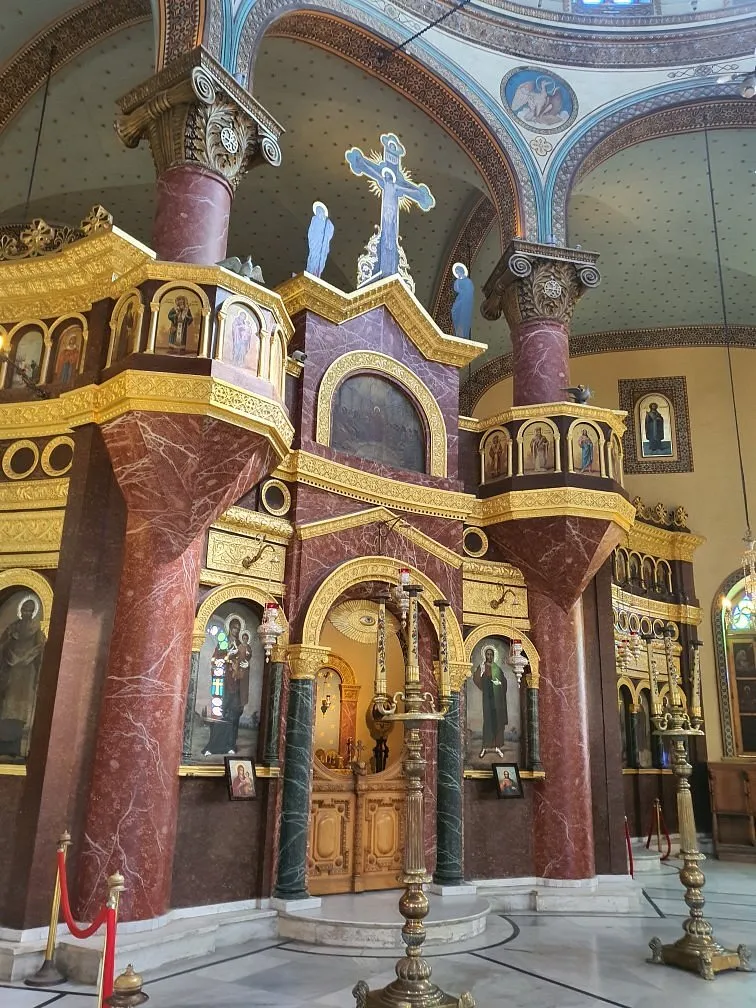
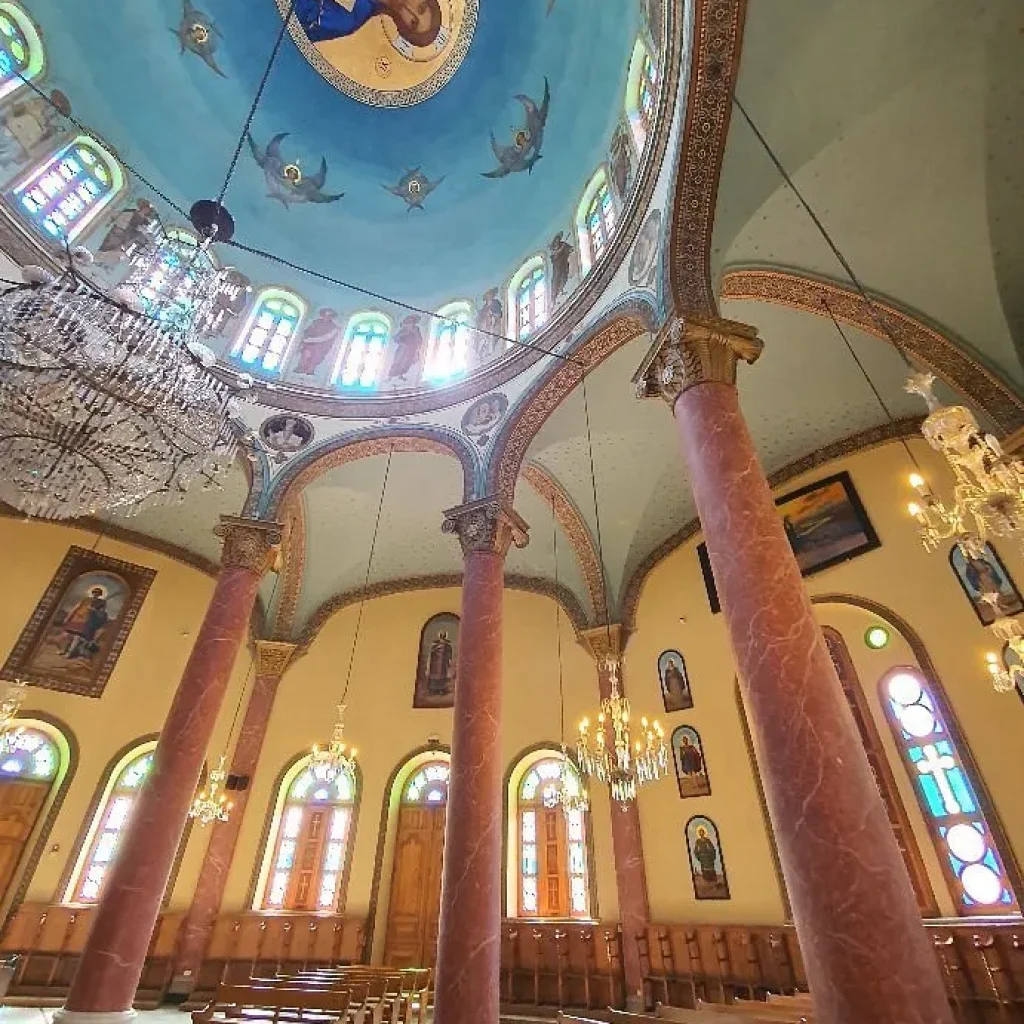
The entrance leads visitors into a space filled with wooden details, icons, columns, and religious artwork. The interior is designed around a basilica-style layout, with a central nave and side sections.
One of the most impressive features is the wooden ceiling, which is often compared to the shape of Noah’s Ark. This design carries symbolic meaning within Christian tradition.
The church contains numerous icons depicting Christ, the Virgin Mary, apostles, and saints. These artworks are important not only for decoration but also for understanding Coptic religious traditions and visual storytelling.
The Interior and Icon Collection
Inside the church, visitors encounter a rich collection of religious icons and decorative elements. Many icons date from different historical periods and demonstrate the development of Coptic artistic styles.
The iconostasis, a wooden screen separating the sanctuary from the main worship area, is one of the most notable features. It includes detailed carvings and religious imagery.
The use of wood, marble, and stone creates a unique atmosphere. Compared with large European churches that often emphasize height and open space, the Hanging Church feels more intimate and focused.
Visitors should take time to observe smaller details because many important elements are easy to miss when moving quickly.
The interior represents centuries of devotion, craftsmanship, and preservation.
Details That Make the Architecture Unique
One of the most remarkable aspects of the Hanging Church is how different materials and artistic styles come together in a relatively small space. Wooden screens, carved panels, marble columns, and religious icons create an interior that reflects centuries of craftsmanship.
Some columns inside the church are believed to have been reused from earlier structures, showing how ancient materials were preserved and incorporated into later buildings. The mixture of materials reflects the changing history of Cairo itself, where different civilizations built upon what came before.
Visitors should take their time exploring the details because many of the church’s most valuable features are found in small decorative elements rather than large architectural forms.
The Connection With the Holy Family
One of the reasons Coptic Cairo holds such importance is its connection with the Holy Family’s journey through Egypt. According to Christian tradition, Mary, Joseph, and the infant Jesus traveled through Egypt to escape persecution under King Herod.
Several locations in Egypt are associated with this journey, and Coptic churches often preserve traditions connected to these events.
Although the Hanging Church is not traditionally identified as the main location where the Holy Family stayed, its location within Coptic Cairo places it in a neighborhood deeply connected with early Christian history.
For many visitors, understanding these traditions adds another layer of meaning to the experience. The church becomes part of a larger story about Christianity’s development in Egypt and the preservation of faith across generations.
The Hanging Church and the Coptic Museum
A visit to the Hanging Church is often combined with the nearby Coptic Museum. The museum houses one of the world’s most important collections of Coptic art and artifacts.
The collection includes manuscripts, textiles, icons, stone carvings, wooden objects, and religious items from different periods of Egyptian Christian history.
Visiting both sites creates a more complete understanding of Coptic culture. The church provides a living religious experience, while the museum explains the historical background behind many artistic and architectural traditions.
Travelers following a hanging church cairo guide itinerary should consider allowing enough time for both locations rather than treating the church as a quick stop.
Nearby Churches in Coptic Cairo
The Hanging Church is surrounded by several other important religious landmarks.
The Church of St. Sergius and Bacchus, also known as Abu Serga, is traditionally associated with the Holy Family’s visit to Egypt. The Church of St. George represents another important part of Coptic Christian heritage.
The Ben Ezra Synagogue nearby adds another dimension to the area’s history, showing how different religious communities existed within the same historic neighborhood.
Exploring these sites together provides a broader understanding of Cairo’s religious diversity.
Coptic Cairo is not only a collection of old buildings. It is a place where different chapters of Egypt’s cultural history meet.
Visiting the Hanging Church Cairo
Visitors interested in visiting hanging church cairo should plan their trip with consideration for both religious activity and sightseeing.
The church remains an active place of worship, so visitors should behave respectfully. Modest clothing is recommended, and photography rules may vary depending on the area and time of visit.
The interior is usually open to visitors during daytime hours, but schedules can change because of religious services and special events.
The best experience comes from visiting without rushing. Taking time to observe the icons, architecture, and atmosphere allows visitors to appreciate the church’s importance.
A guide can also provide valuable historical context, especially for travelers unfamiliar with Coptic traditions.
Best Time to Visit
The Hanging Church can be visited throughout the year, but cooler months are generally more comfortable for exploring Old Cairo.
Morning visits are often recommended because the area tends to be quieter before larger groups arrive.
Weekdays can provide a calmer experience compared with weekends or religious celebrations.
Visitors should remember that this is not only a tourist attraction but also an active church. During services, some areas may have limited access.
Respecting worshippers and following local instructions helps preserve the experience for everyone.
Photography and Visitor Experience
The Hanging Church offers many opportunities for photography, especially because of its wooden details, icons, and architectural elements.
However, visitors should always check whether photography is permitted in specific areas. Some religious spaces restrict photography to protect artworks or maintain a respectful environment.
The best photographs often focus on details rather than only wide views. Carved wood, candlelight, religious paintings, and architectural textures reveal the character of the church.
Travelers should also remember that the value of the visit is not only visual. The atmosphere, history, and spiritual importance are equally significant.
A Symbol of Continuity
The importance of the Hanging Church extends beyond its architecture. It represents the continuity of Christian traditions in Egypt and the relationship between historical heritage and modern religious life.
While many ancient sites are preserved only as monuments, this church continues to serve its community. This connection between past and present is what makes the experience of visiting hanging church cairo different from visiting a traditional museum.
Why the Hanging Church Matters Today
The Hanging Church remains important because it connects Egypt’s past with its present.
Many ancient sites survive only as archaeological remains, but this church continues to serve its original religious purpose. People still gather there for prayer, celebrations, and important Christian occasions.
Its survival reflects centuries of preservation and devotion. Generations of worshippers, craftsmen, historians, and communities have contributed to maintaining the building.
The church also represents the diversity of Egyptian history. It reminds visitors that Egypt’s story includes pharaohs, Greeks, Romans, Muslims, Christians, and many communities that shaped the country over time.
Comparing the Hanging Church With Other Cairo Attractions
Cairo offers countless historical experiences, from Islamic monuments to ancient Egyptian sites.
The Hanging Church provides something different because its importance comes from religious continuity rather than monumental scale.
The pyramids represent ancient royal power. Islamic Cairo reflects medieval architecture and culture. The Hanging Church represents centuries of Christian faith and community.
For travelers interested in understanding Cairo beyond famous landmarks, the church offers a valuable perspective.
A visit does not require an entire day, but it adds depth to any cultural itinerary.
Is the Hanging Church Worth Visiting?
For most travelers interested in history, architecture, and religion, the Hanging Church is absolutely worth visiting.
It may not have the size of Egypt’s largest temples or museums, but its importance comes from its age, symbolism, and continued role in Egyptian Christian life.
The church allows visitors to experience a different side of Cairo one shaped by faith, tradition, and community.
A hanging church cairo guide experience is especially valuable for travelers who want to understand how different civilizations and religions contributed to Egypt’s identity.
Final Thoughts
The Hanging Church is more than an old building. It is a living connection between Egypt’s early Christian heritage and the modern Coptic community.
Its elevated structure, historic location, beautiful interior, and religious significance make it one of Cairo’s most meaningful cultural attractions.
Whether you are interested in architecture, history, or spiritual traditions, the church offers an experience that goes beyond ordinary sightseeing.
Exploring the al-muallqa church allows visitors to discover a chapter of Egypt’s history that is often overlooked but deeply important.
Frequently Asked Questions
Why is it called the Hanging Church?
The church is called the Hanging Church because it was built above the southern gatehouse of the Roman Fortress of Babylon, creating the appearance that it is suspended above the ground.
What is the official name of the Hanging Church?
The official name is the Church of the Virgin Mary. It is also known as al-muallqa church because of its elevated position.
How old is the Hanging Church?
The exact construction date is debated, but the church has roots in the early centuries of Christianity and has undergone many restorations throughout its long history.
What can visitors see inside the Hanging Church?
Visitors can see ancient icons, wooden decorations, marble details, religious artwork, and architectural features reflecting centuries of Coptic Christian tradition.
How long does a visit usually take?
Most visitors spend around 30 minutes to one hour exploring the church, although combining it with nearby attractions in Coptic Cairo requires additional time.
Is the Hanging Church still active today?
Yes. The church remains an active Coptic Orthodox place of worship, with regular services and religious events.
What is the best way for visiting hanging church cairo?
The best approach is to visit as part of a Coptic Cairo walking route, combining the church with nearby museums and historic religious sites for a complete experience.



0 Comment